Getting from one Cuban town to the next became part of our trip rather than an invisible stretch between sights. We travelled with a baby, two large suitcases, backpacks, a stroller and a child car seat. Every change of vehicle involved the same question: where would everything go?
Current planning note, checked 18 October 2026: the UK FCDO advises against all but essential travel to Cuba. Fuel shortages and power failures are disrupting transport and other services. Read the live advisory before making plans; our old experience cannot establish which journeys are possible now. 1
A historical family account first published on 24 March 2016. The transport stories belong to that journey. Current travel conditions were checked on 18 October 2026; the old fares, schedules and ticket procedures are not current booking advice.
Buying bus tickets, and learning to leave room
Dario went to the Viazul station in Havana to buy tickets for the first part of our route. We bought the remaining tickets later in Trinidad. At the time, buying in person felt easier to us than relying on an online process we had not tried.
One departure from Playa Larga taught us to take station time seriously: the bus left about twenty minutes earlier than we expected. Our original article described check-in routines and baggage charges in detail. Those arrangements were observations from that journey, so we have not carried them forward as instructions for passengers today.
The useful planning habit is to confirm the departure point, reporting time and luggage allowance for the particular service you are actually booking. A baby’s equipment changes what counts as a simple transfer. Keep essential documents and the things needed during a delay accessible rather than buried in a suitcase.
The taxi journeys we remember
We used taxis and shared cars in cities and on longer stretches, including Havana to Playa Larga and Santa Clara to Cayo Santa María. Dario’s first attempt to catch a colectivo in Havana ended with a disagreement over the fare; he got out and took another car. It was a small reminder to settle what a quoted price covers before setting off.
Our hosts also arranged taxis to the airport and bus stations. That made meeting a driver easier on our trip. It does not mean every host, vehicle or quote offers the same service now: confirm whether a price is per vehicle or per passenger, where the driver meets you, and what happens if plans change.
The old account was enthusiastic about vintage cars, including vehicles without seat belts. That enthusiasm is part of the memory, not a family-safety recommendation. Appearance and a low fare do not establish whether a vehicle can accommodate appropriate restraints for a child.
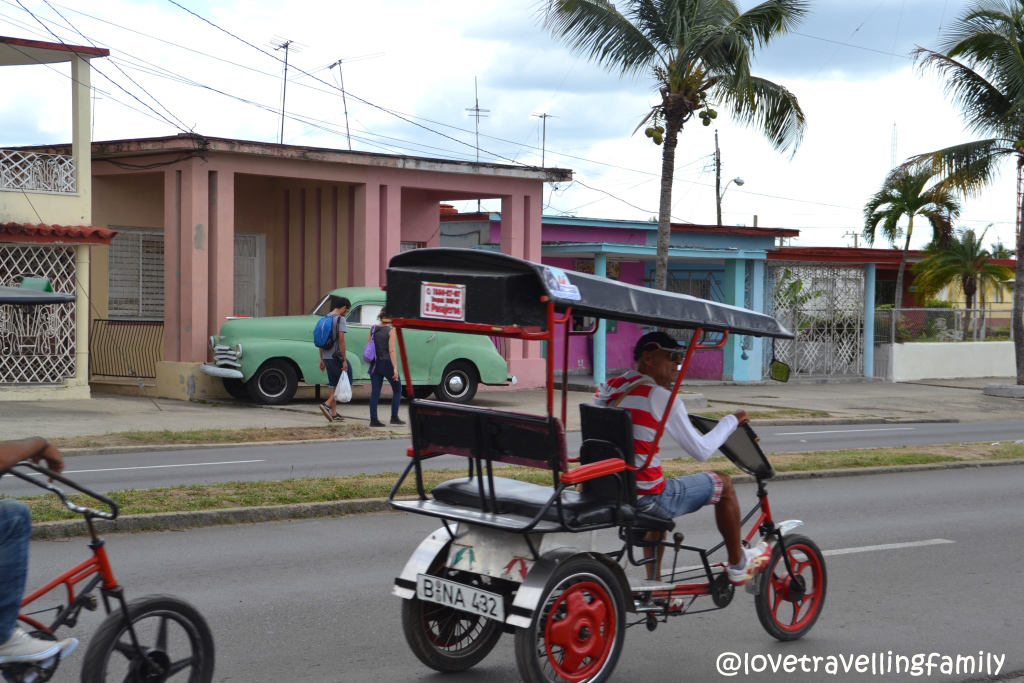
Bicitaxis, bicycles and the last part of a journey
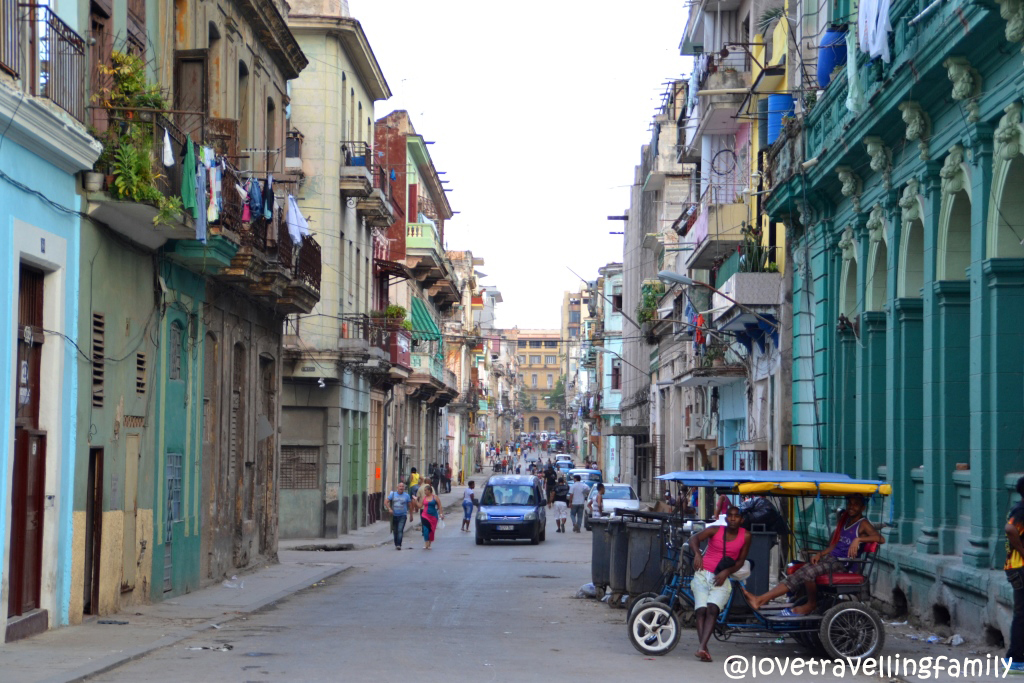
In Trinidad, a bicitaxi driver somehow fitted our family and an extraordinary pile of luggage into one ride. We were amazed by his effort over the cobbles and uphill. Looking back, the story says more about how much we had packed than about a sensible luggage allowance.
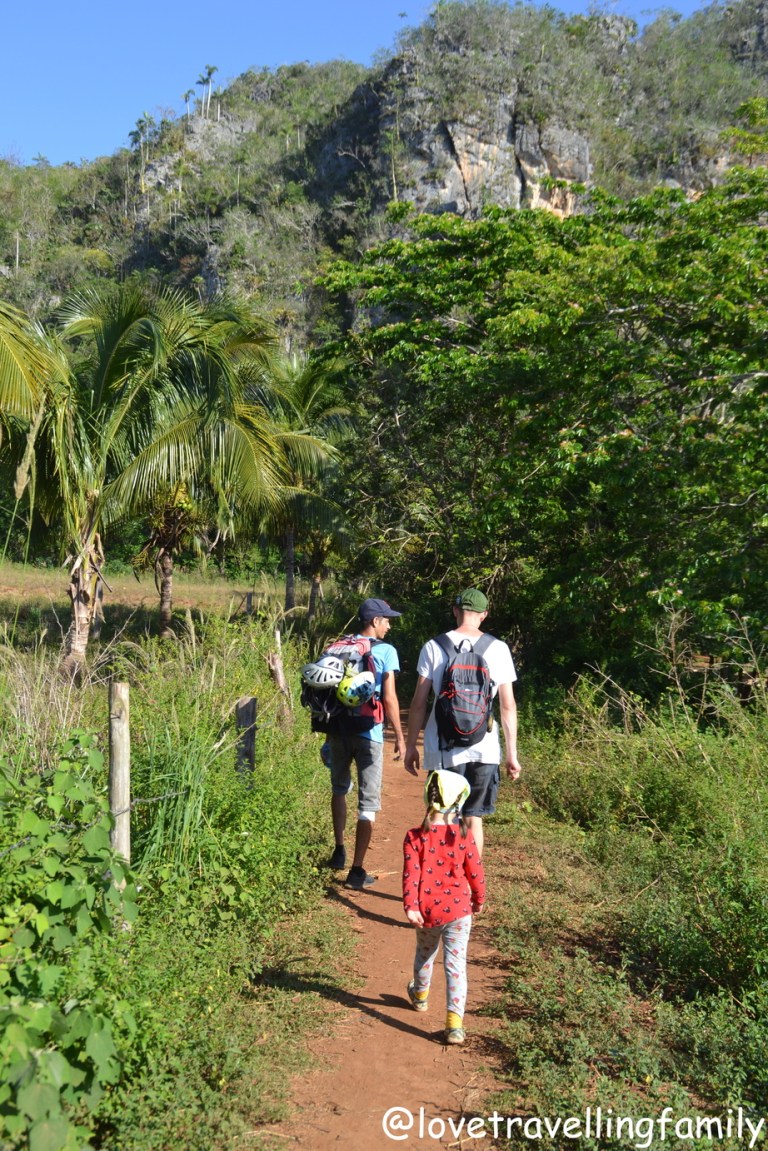
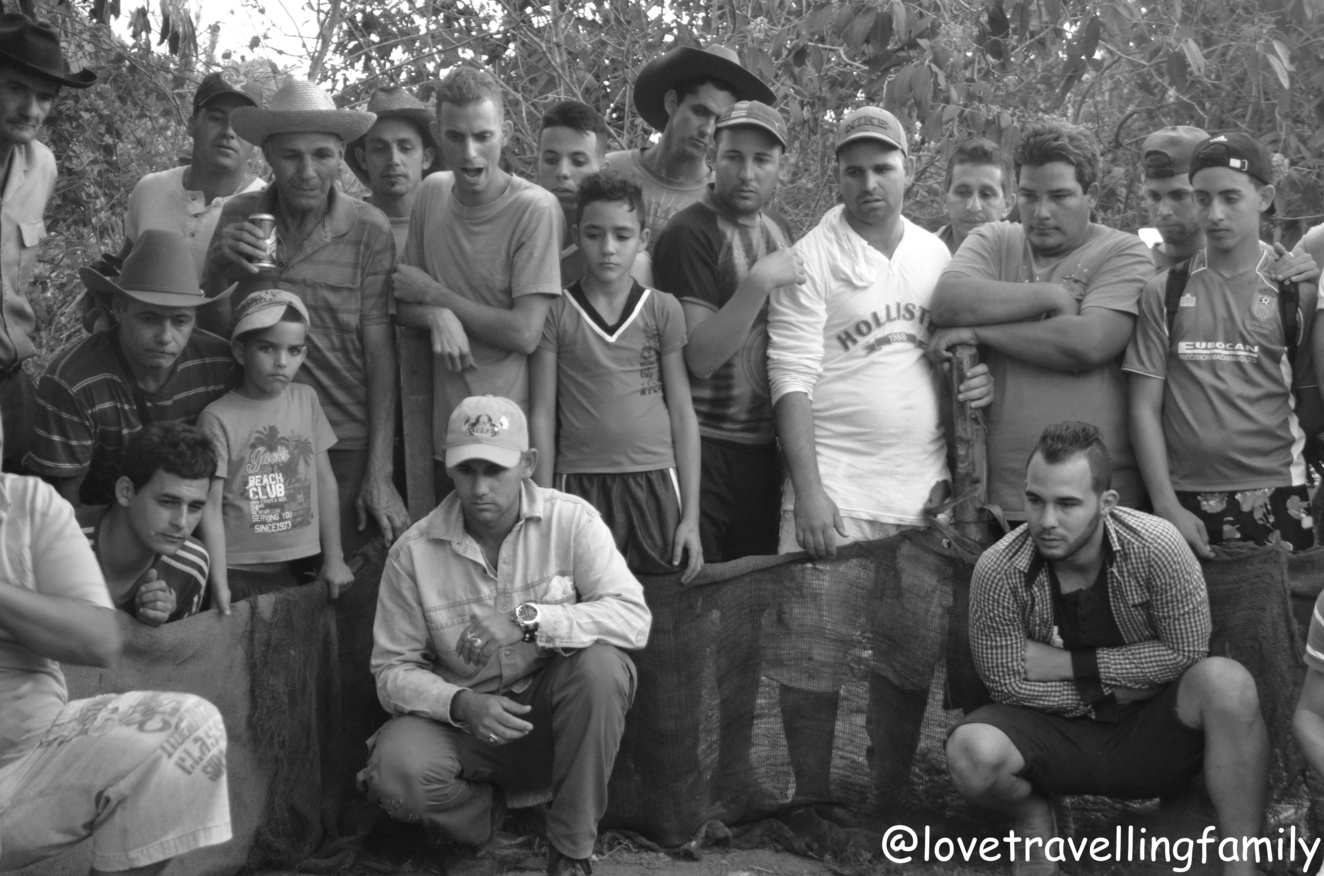
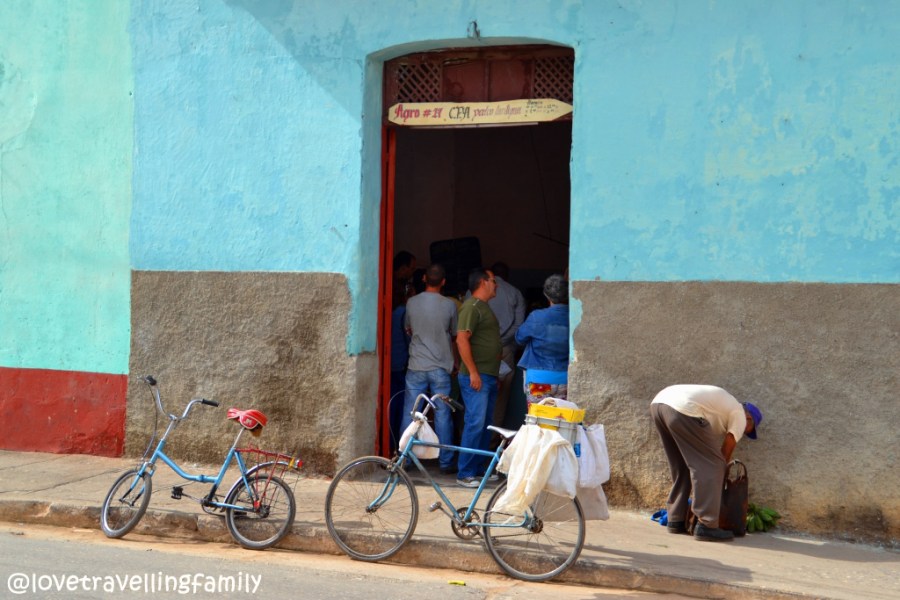
Short journeys were often the most memorable to photograph. A bicycle, a covered passenger seat or a row of old cars could hold our attention as much as the next landmark. The photographs here record that street life; they are not a claim that every transport option suits a baby or a heavily loaded family.
What remains useful from the old journal
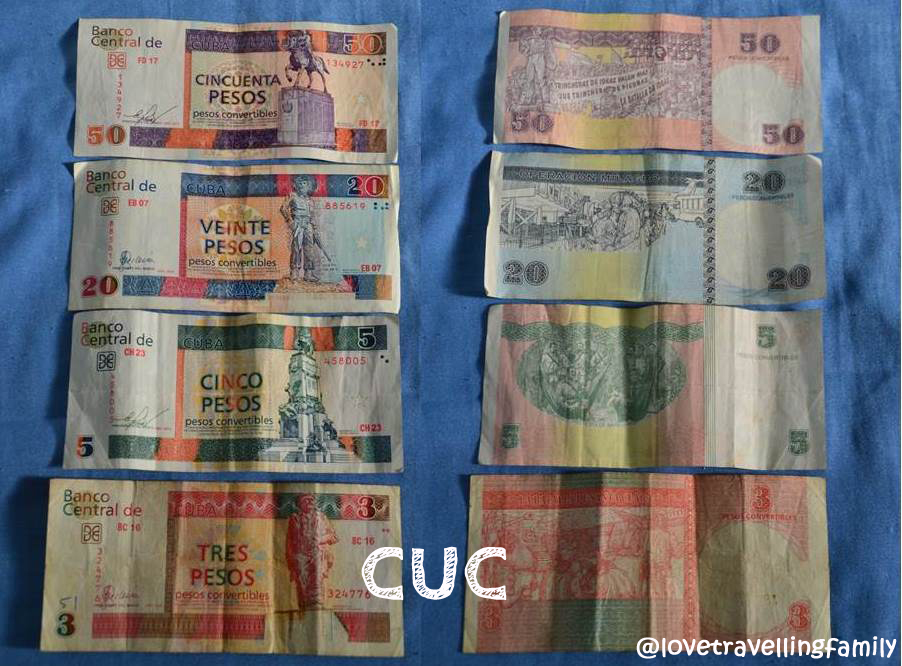
We have left out our old CUC fares and fixed airport-taxi figures. Reprinting a cheap fare from 2016 would give false precision to a journey taking place under very different conditions.
A useful enquiry to an operator includes the route, date, number and ages of passengers, luggage, child-restraint requirements and a way to contact you. Get a clear answer about the actual vehicle and service before relying on it. For the slower part of our Cuban journey, continue with two days in Cienfuegos, where the best memories came from staying in one place long enough to walk.
Good to know
A couple of useful questions
Can I use the fares and bus procedures from the original article?
No. They describe our earlier journey. This restored version keeps the experiences but does not publish those old prices or procedures as current instructions.
Is this a recommendation to travel around Cuba now?
This is a historical journal. Check the current FCDO advice and the advice relevant to your nationality, then confirm any essential transport directly with the provider. 1
Which places in this story have another journal?
Our Cienfuegos journal follows the family walks, the central square and the waterfront during the same Cuban journey.
Sources and useful links
For more context and practical details:
Images and accounts are preserved from our original archive; the note above explains their context. Sources and planning links were checked on 18 October 2026.