I have always loved the Baltic Sea and wanted to see it beyond the Polish coast, so one summer we took our baby girl a little further east. Vilnius and Kaunas are among my favourite cities, and the country is beautiful.
I also want to be honest, because parents deserve all the information. The driving was the most stressful we have experienced anywhere, and we found fewer warm encounters than usual. Neither stopped us from enjoying the places below.
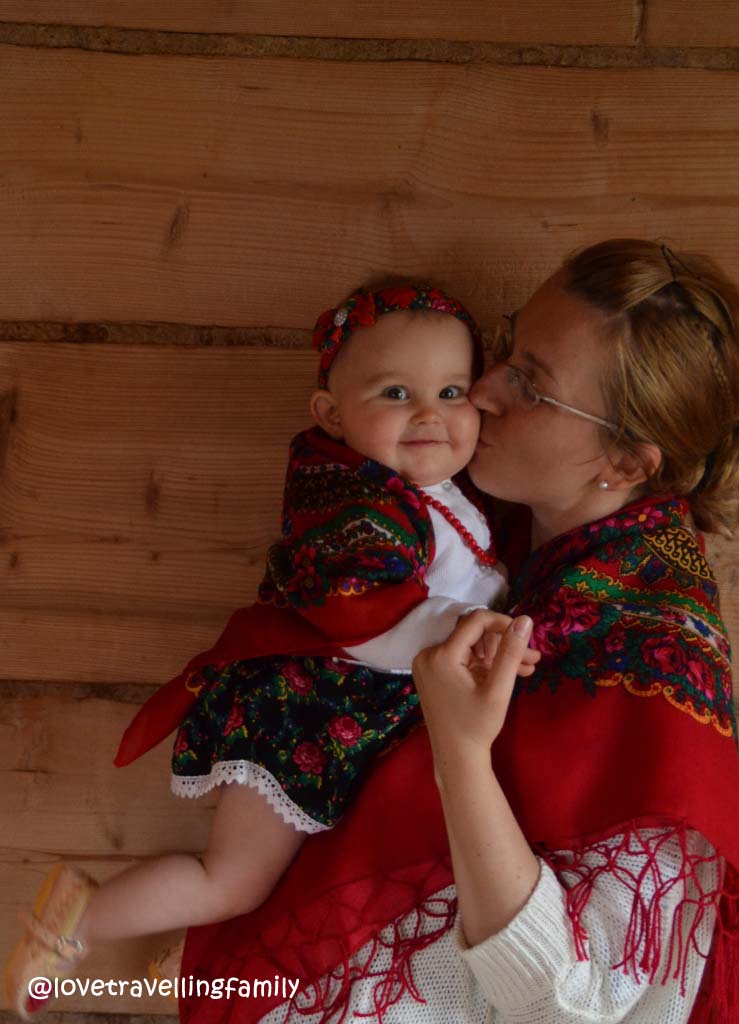
We drove to Lithuania from eastern Poland during a summer holiday, when our daughter Zofia was almost ten months old. My great-grandparents came from Lithuania, and it was not my first visit.
Vilnius
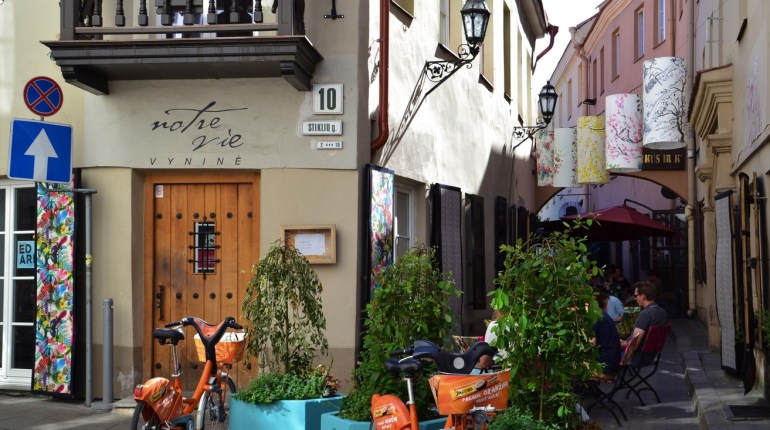
Vilnius has a large, beautiful old town listed by UNESCO. 1 For me it is a sentimental city, closely tied to Polish history and literature. Our favourite places were the Gate of Dawn with its famous painting of the Virgin Mary, St Anne’s Church, the cathedral and Cathedral Square, the Gediminas Castle Tower with its view over the roofs, the Three Crosses and the artists’ neighbourhood of Užupis.
If you are Polish, follow the footsteps of Adam Mickiewicz: his former house and Literatų Street are part of the walk.
Trakai Island Castle
Trakai’s 14th-century castle stands on an island in Lake Galvė. When we visited, a local cultural festival was taking place, and we tasted Tatar dishes and browsed handmade crafts. Trakai has long been home to several communities, including Karaims and Tatars, and that history makes it more than a picturesque castle.
Kaunas and the Rumšiškės open-air museum
Kaunas, Lithuania’s second city, is about an hour from the Polish border. Its old town, castle, Town Hall and the House of Perkūnas make a good first stop.
Rumšiškės is one of the largest open-air ethnographic museums in Europe, with historic farm buildings brought from all over the country. Of all the open-air museums we have visited, it impressed us most. The site is large, so bring a carrier or pushchair, sun protection and an umbrella.
The Curonian Spit, Nida and the Hill of Witches
The Curonian Spit is a thin strip of sand between the lagoon and the Baltic Sea, with some of the highest moving dunes in Europe; it is a UNESCO World Heritage Site. 2 Climb to the great dune near Nida and spend time in the old fishing village.
In Nida we bought smoked fish and asked for one without bones, because of the baby. It was the boniest fish we have ever eaten. On the way north, the Hill of Witches near Juodkrantė, a forest path full of carved wooden witches and devils, turned out to be fun rather than scary.
We found Palanga, the big seaside resort, too crowded and commercial for our taste.
Practical notes for families
- Driving can be aggressive. Keep your distance, avoid long driving days with a baby and take regular breaks.
- Lithuania uses the euro and is in the EU and Schengen area.
- Summer is the best time for the coast; bring layers, as the Baltic can be windy and cool.
- Distances are short: Vilnius, Trakai and Kaunas fit easily into a few days, with the coast as a separate stage.
Good to know
A couple of useful questions
Is Lithuania good for a family trip?
Yes, for its old towns, castles, open-air museum and coast. Be prepared for assertive driving and keep travel days short with small children.
What is the best thing to do with kids on the Curonian Spit?
Climb the great dune near Nida, walk the Hill of Witches near Juodkrantė and spend time by the lagoon and the sea.
Sources and useful links
References for the practical information in this article:
Information checked on 22 October 2026.