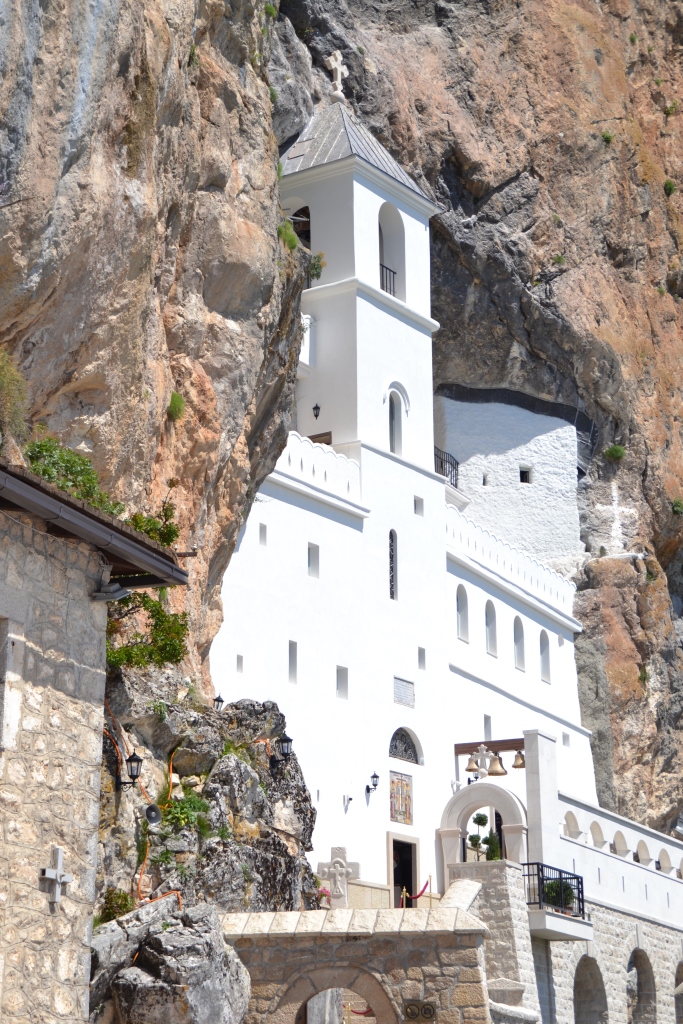
Before we had decided what else to see in Montenegro, we already wanted to visit Ostrog. Its white buildings against the cliff were striking in photographs. What stayed with us after going there was a quieter detail: grass woven into small wreaths.
We arrived with our baby on Holy Trinity Day, when many other people were visiting too. The lower church, the upper monastery and the people we met became parts of the same family memory.
Begin by separating lower and upper Ostrog
Ostrog is a place of Orthodox worship and pilgrimage, associated with Saint Basil of Ostrog. The monastery’s own history describes the lower Holy Trinity church and the upper cave churches against the cliff. They are distinct parts of the complex, rather than one level building. 1
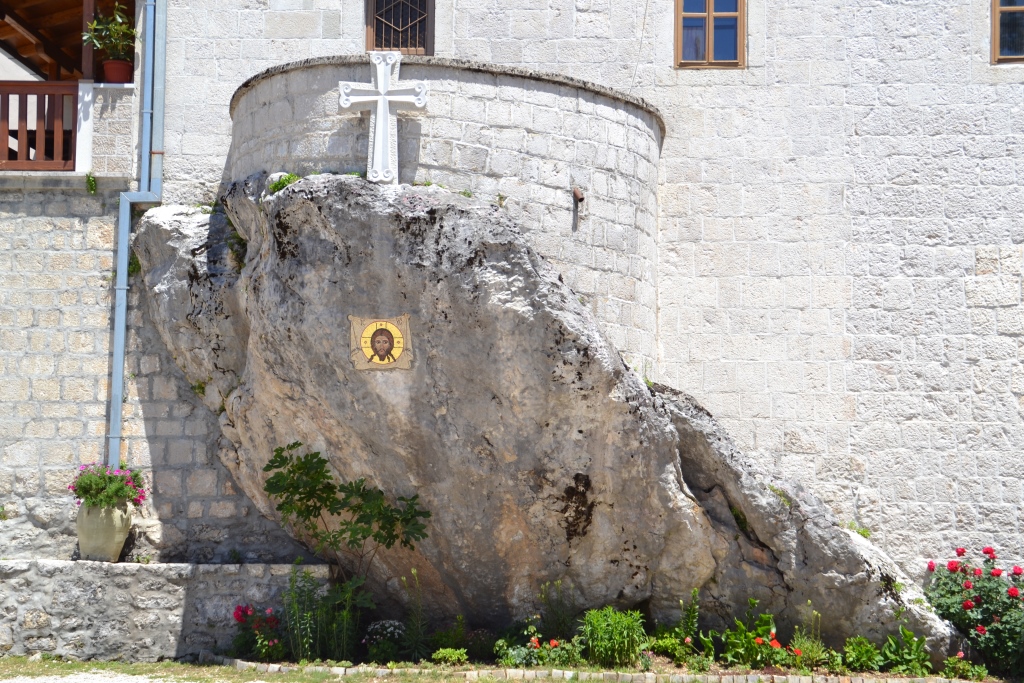
The white façade high in the rock belongs to the upper monastery. The photograph below shows the lower church, where the day’s most personal memory began. Allow for the journey between the two rather than treating them as one stop.
The monastery’s account explains its sacred places from within the Orthodox tradition. Reading that context can help visitors understand why worshippers are there; religious traditions should be described as beliefs, rather than promises about what a visit will do for someone.
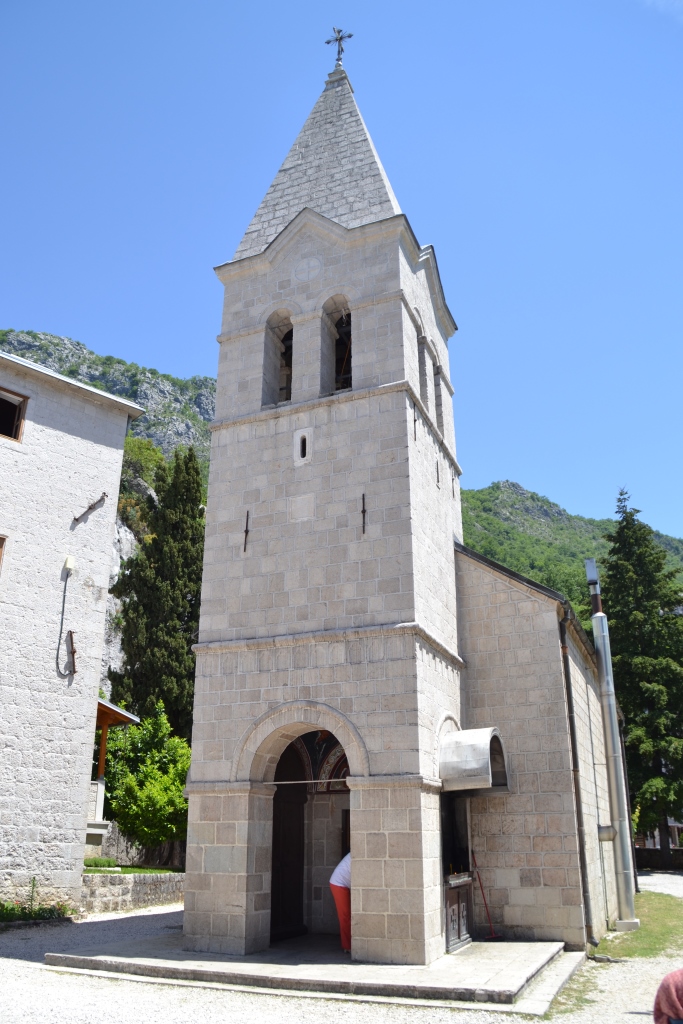
A woman explained the grass on the church floor
We reached the lower monastery as the liturgy was finishing. Monks and nuns were leaving, and we waited before going inside. The grass covering the floor was something we had not expected.
A local woman explained the Holy Trinity Day custom of weaving wreaths from the grass. the three wreaths represented the Trinity and would be taken home and placed near icons.
We made three small wreaths ourselves and put them in the front of the car. They became companions for the rest of the journey: a tangible reminder of a conversation we might otherwise have remembered only in passing.
The welcome mattered as much as the view
People smiled at Zosia and stopped to greet her. A nun came over as we arrived, and other visitors later noticed her at the upper monastery. We felt warmly welcomed on that particular day.
The memory belongs to the people we met. It does not mean every visitor will have the same interactions, or that one nationality is warmer than another. For us, travelling with a baby made those small encounters especially noticeable.
That feeling of connection reappears in our Balkan journeys through the years: places linked by friendship and family memories, while remaining distinct countries and communities.
What to check for your own visit
Security staff allowed us to drive closer when they saw we had a small baby. We were grateful, but this was an arrangement made that day. It does not establish a present entitlement to special parking or vehicle access.
For a new visit, contact the monastery about the parts you hope to reach, worship times and any access needs. Its official portal publishes notices and contact information. Check before relying on an old blog’s driving or walking-time estimate. 2
Allow time for worshippers, follow staff guidance about dress and photography, and ask before photographing people. With a child, leave enough flexibility to rest or shorten the visit. Confirm the approach and any mobility requirements before travelling.
What travelled on with us
The cliff setting made us want to come to Ostrog. The wreaths and the conversation in the lower church gave the visit a place in our family’s own story.
Our Budva journal records another part of Montenegro with a different atmosphere. Reading them together gives a better sense of our trip than asking either place to represent the whole country.
Plan the visit
Know before you go
Lower and Upper Ostrog Monastery
- Plan your time
- Keep Lower and Upper Ostrog as two parts of the plan, with a pause between them. Travel in daylight and leave the upper visit optional if the climb or crowds do not suit your family.
- Booking & access
- For a group, overnight stay or specific assistance, contact the monastery before setting out. Confirm your vehicle approach and parking arrangements.
The official monastery history distinguishes the Lower Monastery’s Holy Trinity church from the Upper Monastery’s cliffside churches.
Visitor information checked 19 October 2026. Timing suggestions are our planning advice.
Good to know
A couple of useful questions
Should we visit the upper or lower monastery?
They are distinct parts of the complex. Choose what fits your time and mobility, and allow for the approach between the lower Holy Trinity church and the upper cave churches. 1
Can we drive close to the churches?
We were allowed closer on our visit with a baby. Establish current vehicle and parking arrangements before travelling; they determine how much walking the outing involves.
How should we prepare for a worship visit?
Follow monastery notices and staff guidance on dress, photography and access. Give worshippers space and keep your schedule flexible. 2
Sources and useful links
References for the practical information in this article:
- Ostrog Monastery — official history of the complex ↗
- Ostrog Monastery — official notices and contacts ↗
Information checked on 19 October 2026.