After walks through Centro Habana and Old Havana, we wanted a day that moved beyond the best-known squares and façades. We went first to Colón Cemetery, then to Callejón de Hamel. The change from quiet memorials to drums and dancers made the two visits feel very different.
Our daughter was one, and what stayed with us was personal: a woman explaining a gesture at a grave, the care people showed a young child, and the attention of a crowd listening to music. We were guests in places that meant much more to the people around us than an afternoon’s sightseeing.
Begin at Colón Cemetery in Vedado
Necrópolis Cristóbal Colón is an extensive working cemetery, with avenues, chapels, mausoleums and carved family memorials. Cuba’s official Havana guide places it at Calzada de Zapata and Calle 12 in Vedado and describes its architectural and sculptural significance. 1
We entered through the northern gate and followed the main avenue, stopping for monuments and individual graves. The firefighters’ memorial and the tomb of musician Ibrahim Ferrer were among the places that drew our attention. It was a visit made of small pauses, not simply a walk from one entrance to another.
Choose a few things you want to understand, then give the spaces between them time. A map or knowledgeable local guide can help distinguish an important memorial from an impressive sculpture whose story you have not yet learnt. The photographs are a reason to look more closely, rather than the whole purpose of being there.
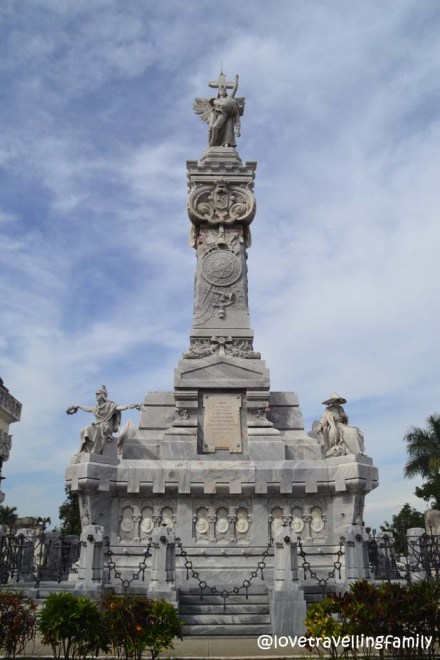
La Milagrosa: a woman showed us how to approach
At the tomb known as La Milagrosa, the mood changed. People came with flowers, prayers and their own reasons for being there. We listened to the story attached to Amelia Goyri’s grave and watched how visitors approached it.
We walked around the grave with Zosia. When I turned to leave, a woman patiently explained the local custom of keeping your face towards the tomb. We went around again, our daughter knocked with the ring we had been shown, and we stepped away facing the grave.
The woman waited until we had finished, then smiled and spoke of a blessing for the baby and our family. What I remember most is her generosity: she had taken the time to explain something meaningful to her, and had welcomed us into that moment.
Look carefully, photograph with care
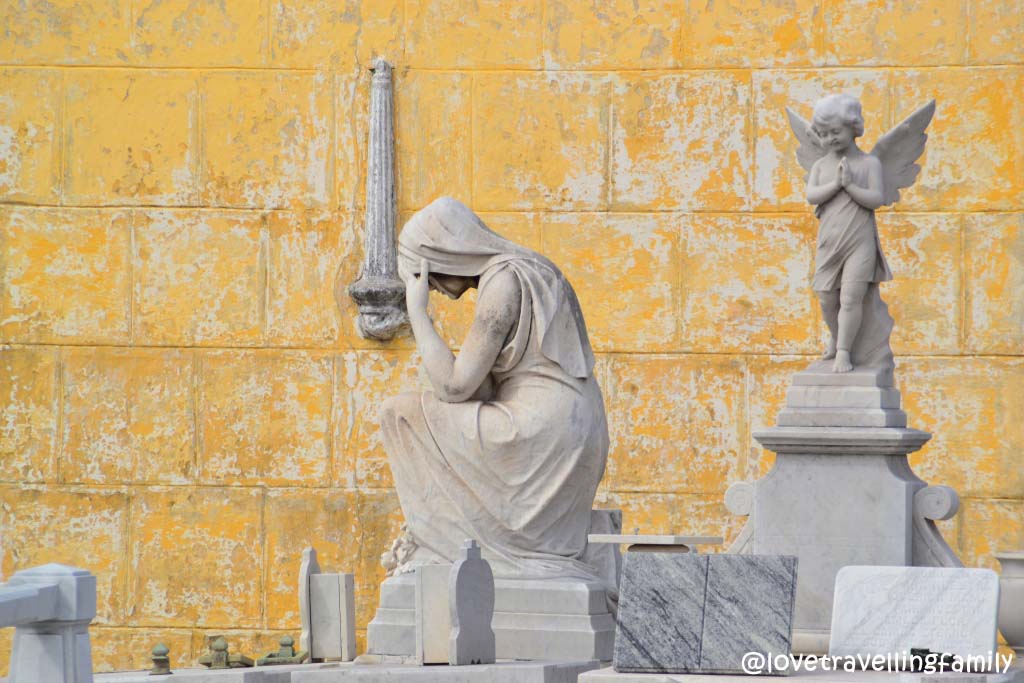
The sculpture gave us reasons to stop: faces, wings, hands and carved stone set against palms or a weathered wall. Looking closely made the cemetery feel less like a collection of grand monuments and more like individual expressions of grief and remembrance.
Leave room for people visiting loved ones and for any funeral taking place. Ask before photographing identifiable mourners or someone practising a devotion. With a young child, keep the visit flexible and take a rest before attention or energy runs out.
Plan the outdoor part of the day around the heat, drinking water and the way back. If access or mobility will shape your visit, establish the actual entrance and route beforehand. The cemetery and Callejón de Hamel are separate stops, so give the transfer its own place in the plan.
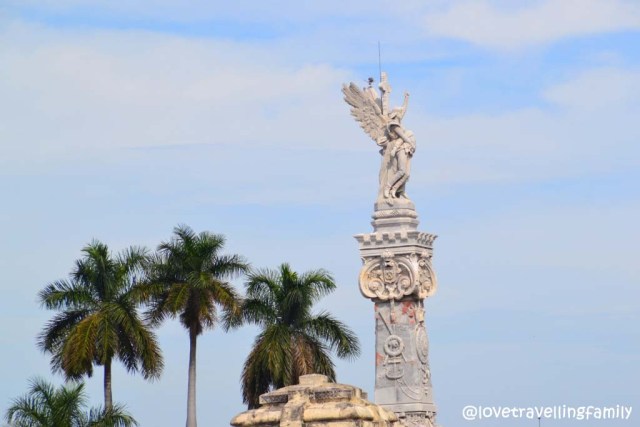
Callejón de Hamel: from the quiet to the music
It was Sunday when we went to Callejón de Hamel. After the cemetery’s quiet, the drums, voices and movement felt especially vivid. Zosia watched with fascination, and people made room for us to see.
The alley’s murals, sculptures and installations form part of an Afro-Cuban cultural space. Cuba Travel describes it between Aramburu and Hospital, with art and religious symbolism woven into the public setting. Take time to look at those details as well as any performance. 2
I had spent two years of my studies reading about slavery and African-American society. Being there made me want to listen and learn more closely. The experience belongs to the performers and community first; our part was to pay attention, respect the space and appreciate what people chose to share.
Understanding the rhythm adds to the visit
Rumba has deep roots in African culture, alongside Antillean influences and Spanish flamenco. UNESCO’s 2016 inscription recognises the music, dance and associated community practices. That wider context gives a visitor more to listen for than a performance time on an itinerary. 3
Our own memory is of the force of the live music and the expressions on people’s faces. The crowd was part of what made the afternoon memorable. With a small child, choose somewhere you can step back, rest or leave without pushing through people.
If a live session is the main reason for going, confirm the particular day and event before arranging transport. Our Sunday experience and the tourism board’s description of regular gatherings are useful background; the specific programme is what matters for a new booking.
Give the two stops enough room
Start with one cemetery visit and an unhurried break. Add Callejón de Hamel around a confirmed programme if music is your priority, or around time to look at the art. Do not make the whole day depend on fitting an exact performance between several other commitments.
For any guided visit, agree the meeting point, language, duration and total terms with the provider. For transport, establish both the destination and the return arrangement. A simple plan leaves more attention for the places themselves.
Current travel note: FCDO advises against all but essential travel to Cuba. Fuel, electricity and water shortages are disrupting transport and tourism services. Consider that advice before making a new journey, and confirm arrangements with your provider. 4
Continue through Havana and beyond
The day stayed with us because of the difference between its two settings, and the people who helped us understand a little more in each. Quiet remembrance and shared music both asked us to slow down.
For another way of looking at the city, continue with our Havana photographs. Our Cuba transport notes cover the practical decisions between places, while Cienfuegos with a child follows a slower visit to another Cuban city.
Plan the visit
Know before you go
Necrópolis Cristóbal Colón
- Plan your time
- Choose an unhurried outdoor visit, followed by a break before the next stop.
- Booking & access
- Confirm entry arrangements and any guided visit locally; agree a meeting point and language before booking.
A working cemetery in Vedado with important memorial sculpture. The official city-guide PDF identifies the site at Calzada de Zapata and Calle 12.
Callejón de Hamel
- Plan your time
- Plan around a confirmed session if live music is your priority; leave time to see the art as well.
- Booking & access
- Confirm the particular performance and any guide or transport arrangement before choosing the rest of the day.
Cuba Travel places the alley between Aramburu and Hospital and describes its murals, sculpture and Afro-Cuban cultural life.
Visitor information checked 19 October 2026. Timing suggestions are our planning advice.
Good to know
A couple of useful questions
Are Colón Cemetery and Callejón de Hamel in the same area?
Treat them as separate stops. The cemetery is in Vedado, at Calzada de Zapata and Calle 12; Callejón de Hamel is between Aramburu and Hospital. Allow for the transfer and a break rather than treating them as one small walking site. 1 2
Should we choose the day around a performance?
Yes, if live music is your main reason for visiting Hamel. Confirm the actual session before arranging the rest of the day. We went on a Sunday, but do not use our visit as a current event timetable.
What matters most when visiting with a young child?
Choose a short, flexible cemetery route and a place at a performance where you can step back easily. Allow water, shade and a break between the two settings, and respect people who are mourning or worshipping.
Sources and useful links
References for the practical information in this article:
- Cuba Travel — official Havana guide (2020), cemetery location and heritage ↗
- Cuba Travel — Callejón de Hamel: art, religion and dance ↗
- UNESCO — 2016 decision recognising Cuban rumba ↗
- FCDO — current Cuba travel advice ↗
Information checked on 19 October 2026.