Before Thailand, I had not thought carefully enough about what an elephant ride asks of the animal. Researching a family outing changed the question from “Where can we ride?” to “How can we see elephants without making the encounter revolve around us?”
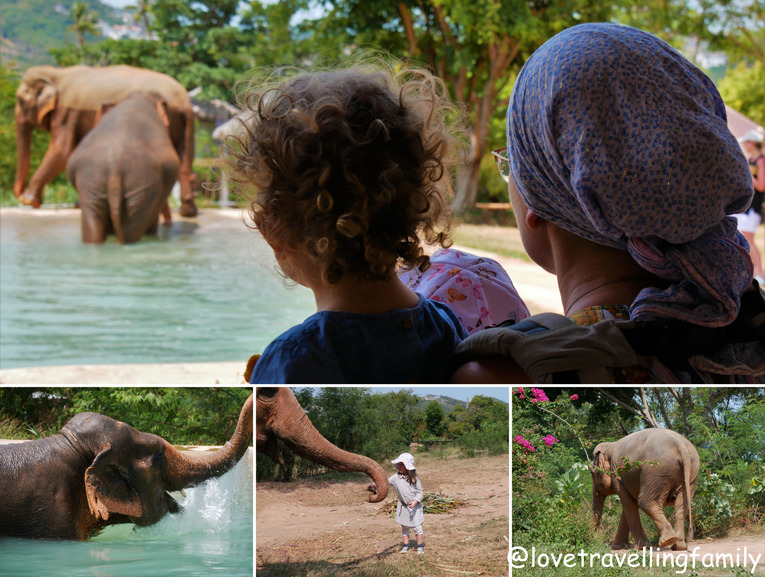
We chose Samui Elephant Sanctuary and came home with strong memories. Our visit included feeding and some touching, which is visible in the photographs. Current World Animal Protection guidance favours observing elephants without riding, bathing or touching them. That distinction deserves to sit alongside our earlier experience. 1
First published on 22 August 2020. Our original account describes a March visit with daughters aged five and almost two. The memories and photographs are historical; present operator information and welfare guidance were checked on 18 October 2026.
The morning our family spent at the sanctuary
We chose the morning programme because it was hot in March and our daughters were small. A hotel pickup, an introduction and time with a guide helped structure the visit. The children were five and almost two, so we were thinking about their attention and comfort as much as the itinerary.
During the introduction we heard about elephants and the animals living at the sanctuary. We were given food, split into smaller groups and walked with a guide. Our daughters remembered feeding bananas long after the outing. Those are specific memories from our family’s day, not a description of every programme offered now.
The staff’s care impressed us at the time. Still, a pleasant visit and a parent’s impressions are not an independent assessment of an animal’s welfare. We want the original pleasure of seeing the elephants to remain in this story without turning it into a blanket endorsement of every kind of close encounter.
Watching the elephants, rather than joining their bath
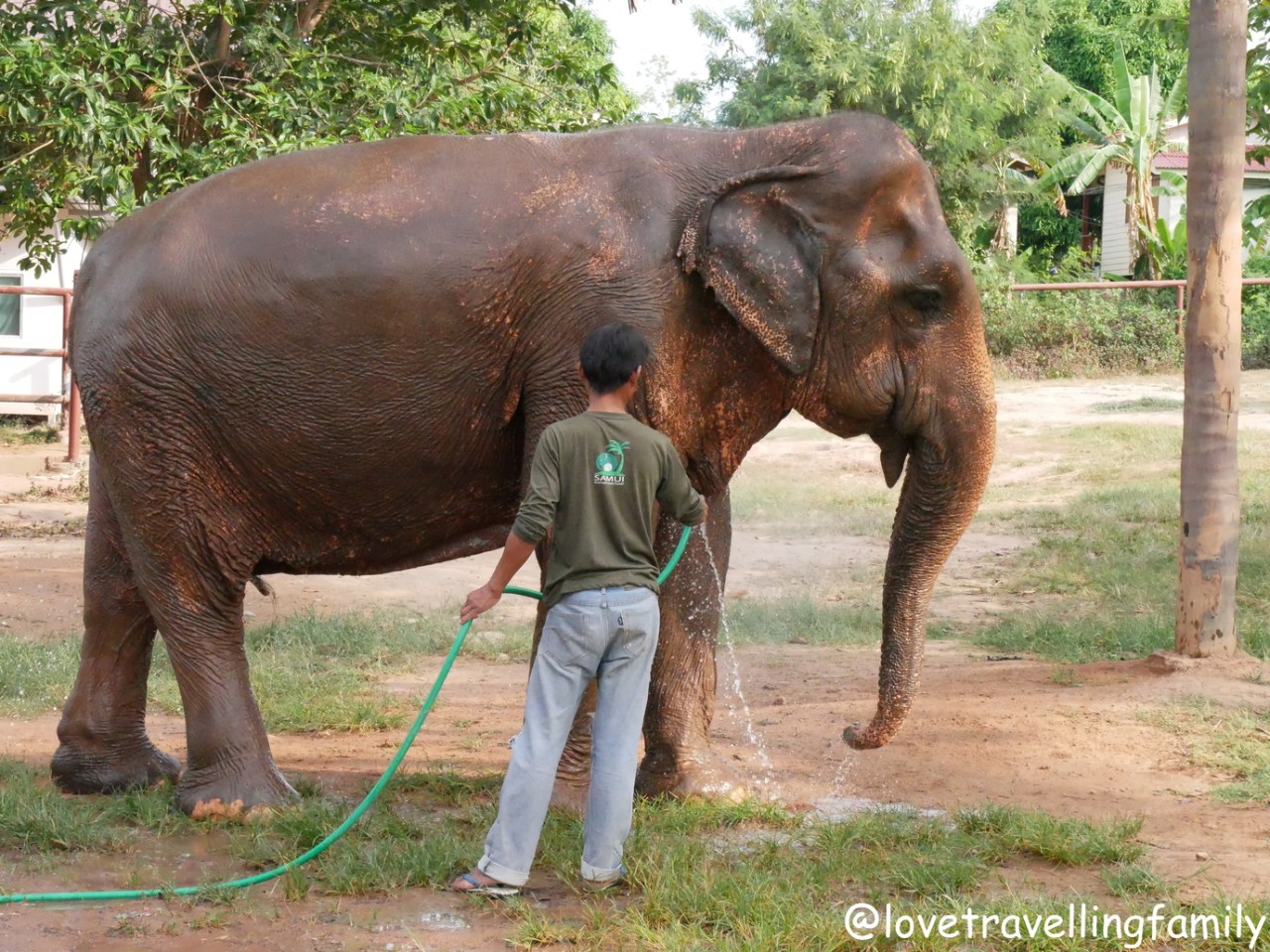
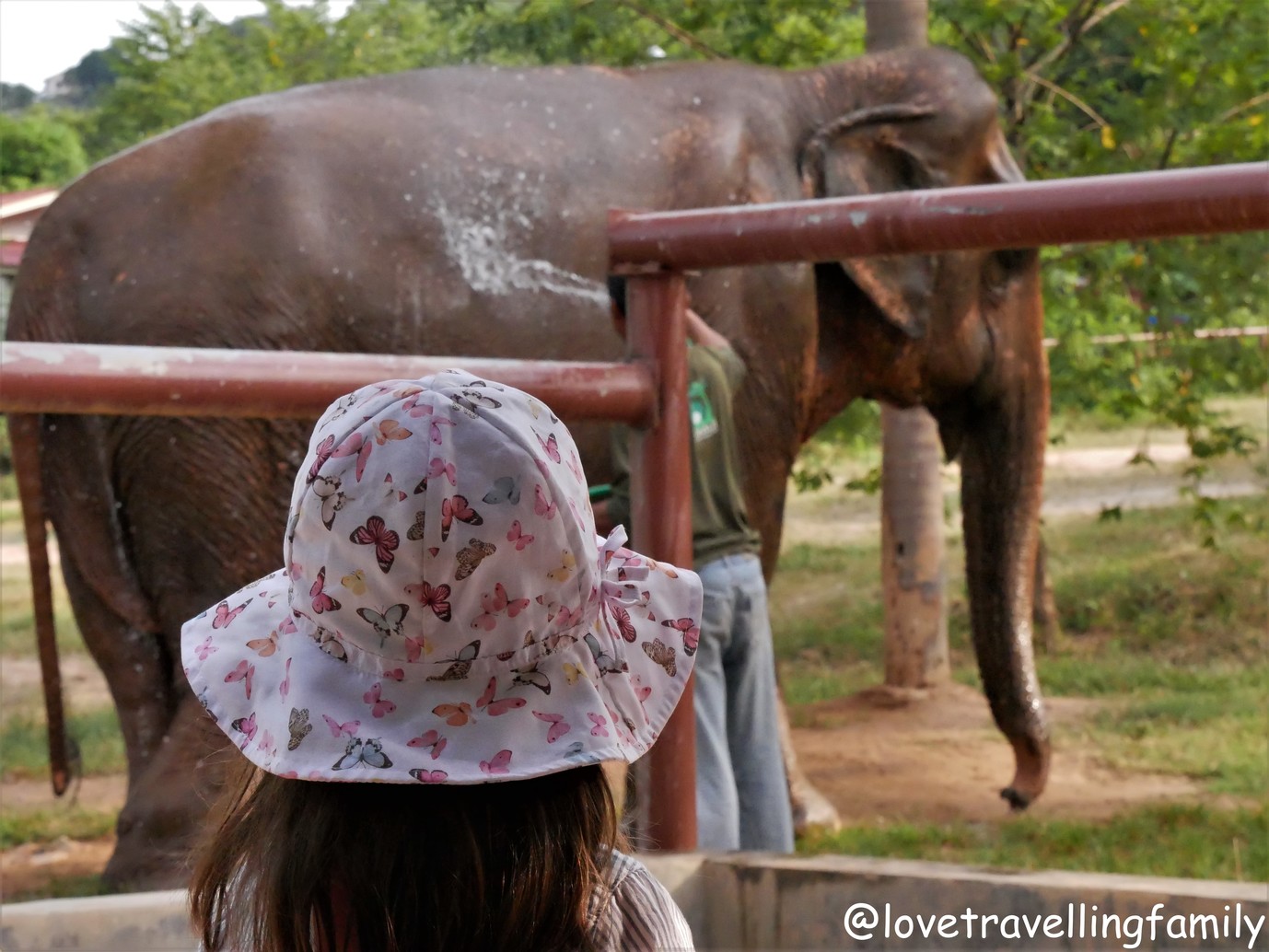
Our original journal made a distinction between watching elephants bathe and tourists bathing with them. We watched. The photographs also show a worker using a hose, which is a separate scene from visitors getting into water with the animals.
It is easy for holiday descriptions to blur these differences. Before booking, ask exactly what visitors do: observe at a distance, feed over a barrier, walk close to the animals, touch them or enter the water. A gentle-sounding name for an activity does not explain how much choice or space the elephants have.
How current welfare guidance changes the choice
World Animal Protection recommends hands-off observation and warns that the word “sanctuary” alone is not proof of good welfare. Its current guide distinguishes venues following its Elephant Friendly guidelines from other high-welfare venues. Samui Elephant Sanctuary appears in the latter group, marked for barrier hand-feeding. This is not an observation-only or certification claim. 1
The operator’s own current programme still includes feeding, and its Bophut description allows limited close interaction. It states that it does not offer riding, shows or tourist bathing. Read the specific branch and programme rather than assuming our old visit describes its whole present offering. An operator’s description and an independent welfare organisation’s criteria answer different questions. 2
Questions to ask before taking children
For a new outing, begin with the kind of experience you want your children to learn from. Watching an animal eat, move and interact with other elephants can be the point of the visit; a photograph of a child touching one need not be the goal.
The old ticket prices, child discounts and payment arrangements in our 2020 post have not been retained as current promises. Confirm the selected programme, meeting arrangements, age requirements and cancellation terms directly. Keep the day manageable for the youngest person in the family, and be willing to leave an activity that does not feel appropriate.
Travel with children has often meant revising an adult’s original plan. Our Cienfuegos journal remembers an afternoon that became a long pause in a square because our daughter was happy there. Different settings, but the same value in paying attention rather than completing a checklist.
Good to know
A couple of useful questions
Did our family ride or bathe with elephants?
No. The earlier visit included feeding and some touching, and we watched elephants bathe. The worker-with-hose photographs do not show our family bathing with elephants.
Does “sanctuary” mean there is no visitor contact?
No. Check the activities themselves. World Animal Protection recommends hands-off observation, while Samui’s current operator page describes feeding and some limited interaction. 1 2
Are the original prices and children’s discounts still valid?
They were details of the earlier visit. Use the selected operator’s current programme and terms rather than the figures from the original journal. 2
Sources and useful links
For more context and practical details:
- World Animal Protection — Elephant friendly tourist guide ↗
- Samui Elephant Sanctuary — current programmes and visitor activities ↗
Images and accounts are preserved from our original archive; the note above explains their context. Sources and planning links were checked on 18 October 2026.