We set out from Yerevan with monasteries in mind and a planned night in Yeghegnadzor with people connected to friends of friends. The journey became just as much about the people who helped us between those places: tomato growers, a teacher with a school group, a truck driver and the people we met at a winery.
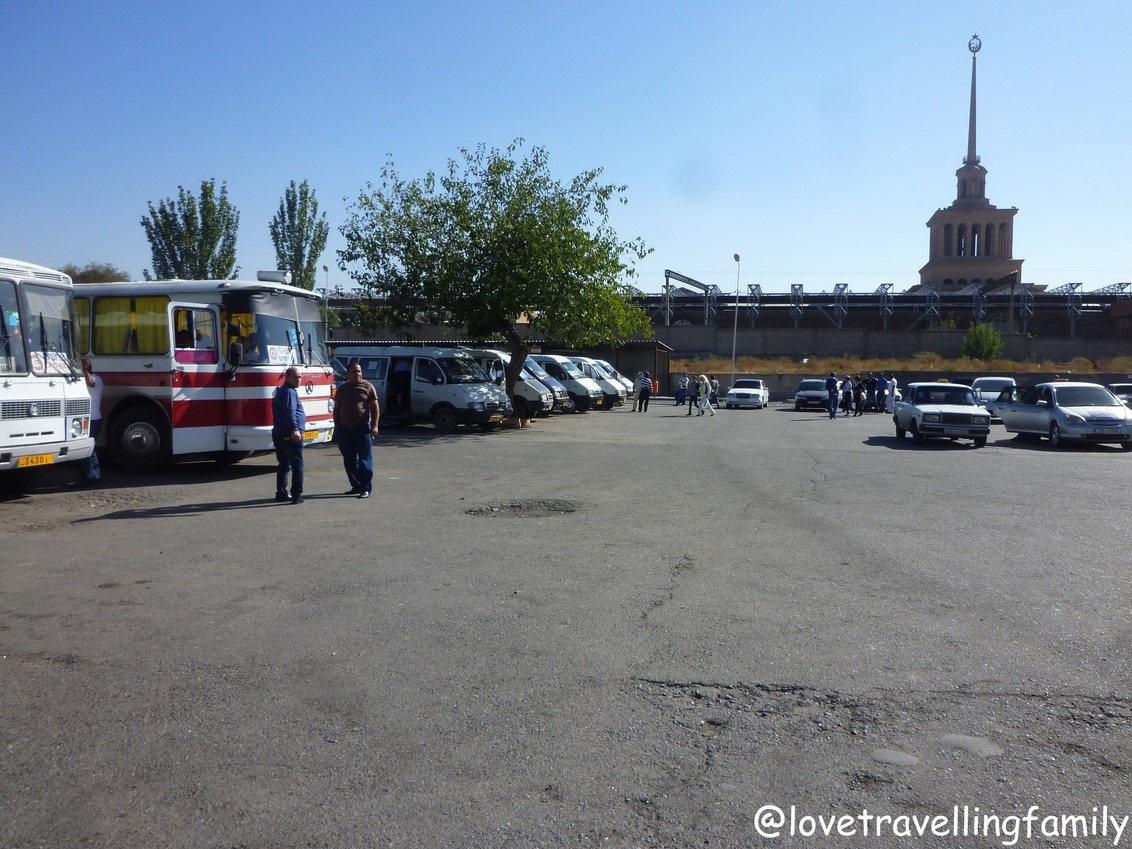
Our route led to Khor Virap, Areni and Noravank. It was a particular journey south of the capital, rather than a tour through every southern province of Armenia. The photographs here show the Yerevan departure and our Areni stop; the monastery descriptions come from the original written account.
First published on 14 September 2017. This is an earlier journey south of Yerevan, not a verified present-day transport schedule. The original does not establish children’s ages on this part of the trip. Monastery context and planning links were checked on 18 October 2026.
The last part of the journey to Khor Virap
The marshrutka left us at a junction rather than at the monastery itself. We began walking and met a couple gathering tomatoes beside the road. They invited us over, talked with us and shared their tomatoes. That pause became one of the strongest memories of the day.
We later accepted a lift for the remaining stretch. The original journal celebrated the spontaneity of that journey. It records what happened to us, rather than a transport plan whose connections another traveller can rely on.
The official tourism information also distinguishes public transport towards the nearby settlements from reaching the monastery entrance. When planning now, settle the final approach and onward transport, rather than buying a ticket to a nearby town and assuming the rest will work itself out. 1
Khor Virap: a landscape and a religious story
Khor Virap mattered to us for its setting and the stories people told about it. The view towards Mount Ararat was part of the experience, but so was hearing how closely the site is connected with Armenia’s Christian identity.
Armenia’s official tourism account links the monastery with Gregory the Illuminator and the adoption of Christianity in 301. In the Christian tradition associated with the site, King Tiridates III imprisoned Gregory there for thirteen years. The names and duration are clearer than the contradictory versions in our earlier post; the religious narrative should be understood as tradition. 1
For a visit, consider what entering an old religious complex actually involves: uneven ground, steps and rules for particular spaces. The original photographs of chambers and buildings did not amount to an accessibility assessment, and our enthusiasm is not a guarantee of unrestricted entry today.
Areni, and help with the next stretch
After Khor Virap we travelled part of the way with a school group and then in a truck. Its driver was heading towards the region near Iran; we left the truck at Areni. Our story does not describe crossing into Iran or continuing to the border.
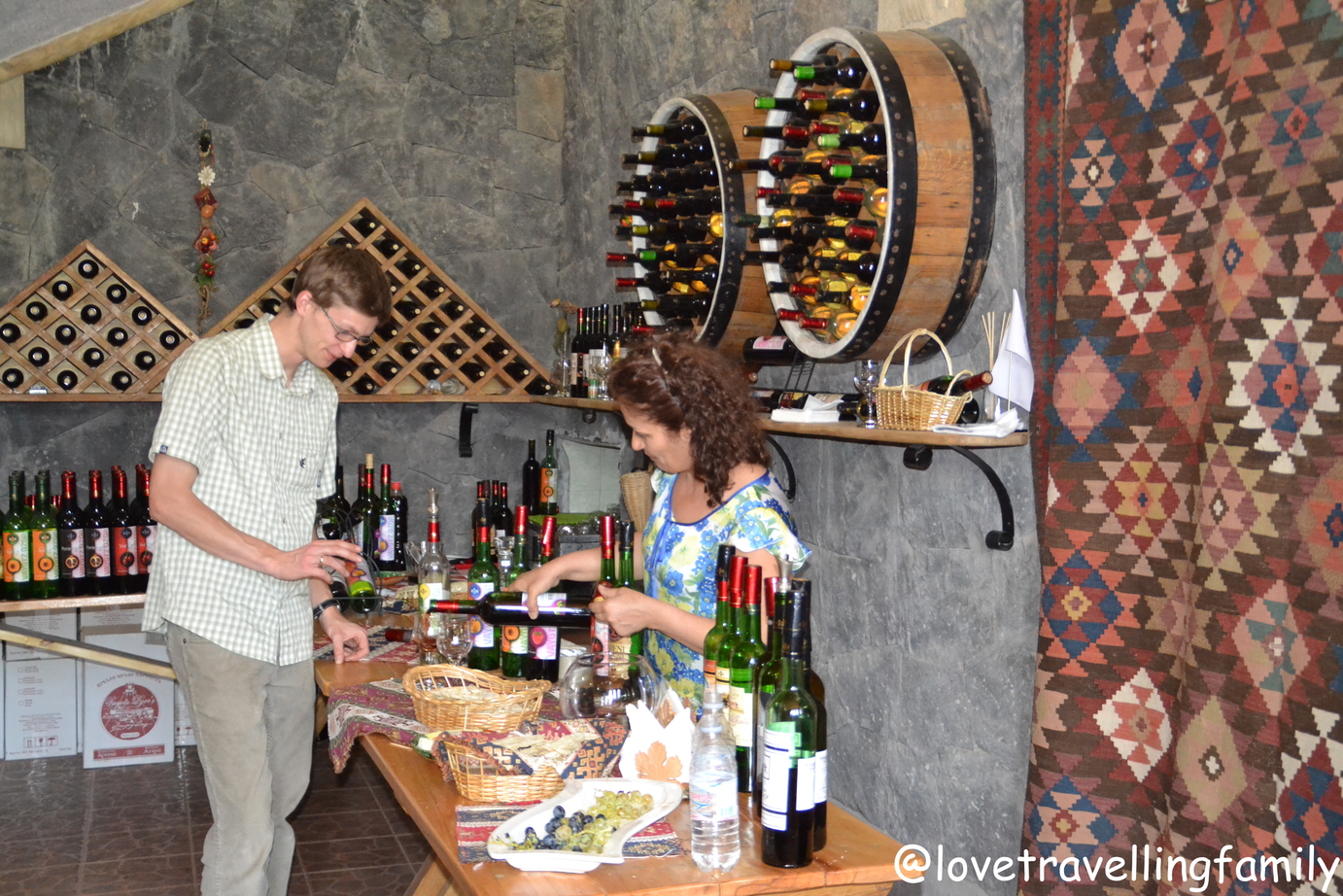
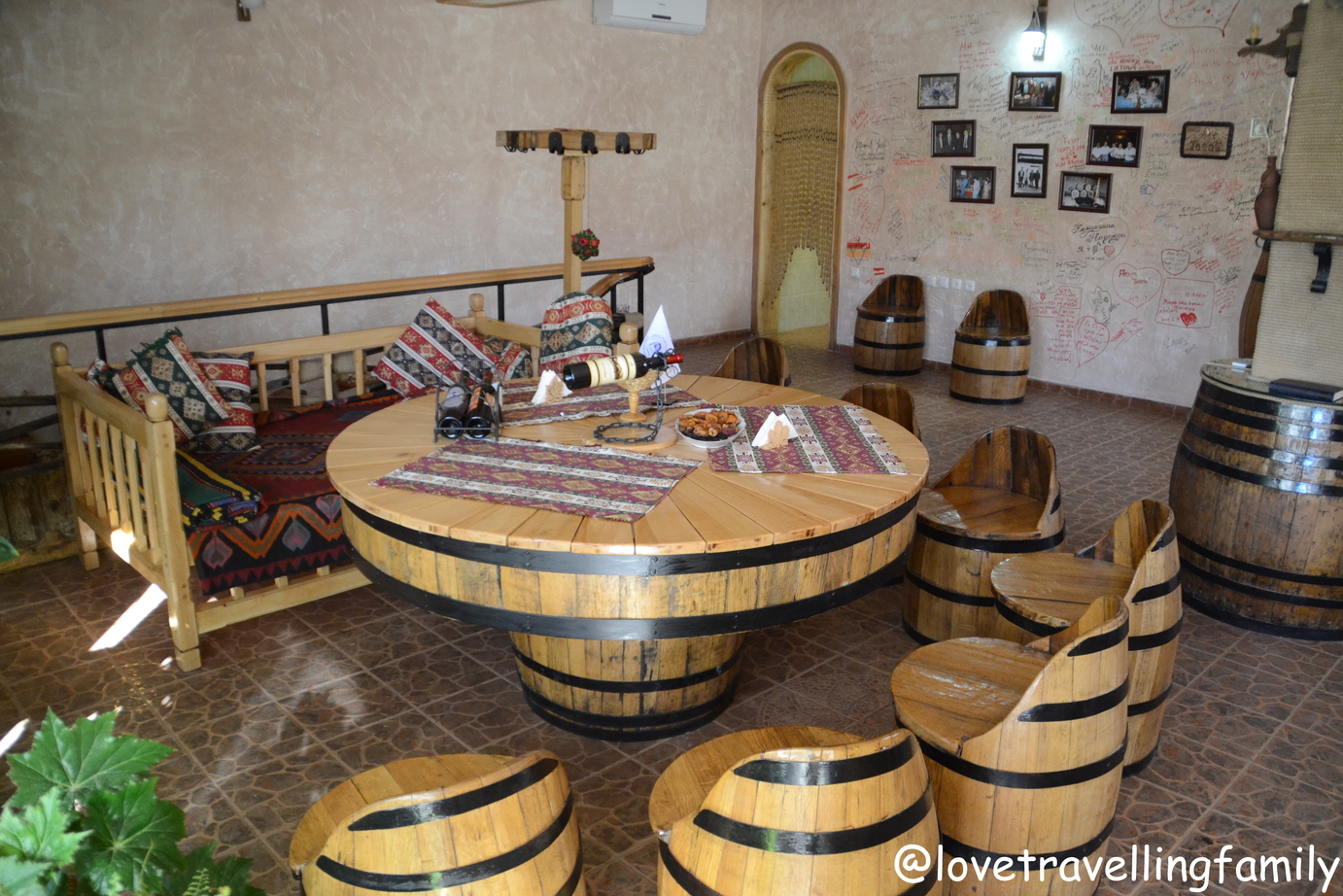
At Areni Winery we were offered coffee or tea, then wine, and help arranging the next part of the journey. That hospitality mattered as much as the tasting. The two winery photographs on this page show that modern venue, not an archaeological cave or an interior at Noravank.
We arranged a driver to take us to Noravank and then onwards to Yeghegnadzor. Agreeing the route and price before setting off made that arrangement clear. For a trip now, also confirm the waiting time, return or onward destination and what happens if you decide to shorten the visit.
Noravank: stone carving against the canyon
Noravank was one of our favourite monastery visits. We remembered the two-storey church, its distinctive exterior steps, the carved cross-stones known as khachkars and the landscape around it. Looking closely at the stonework was as important as seeing the whole complex from a distance.
The official tourism description places the monastery in Vayots Dzor, within the red-rock setting of Gnishik Canyon, and connects it with the work of Momik. Our earlier account also describes a visit to the small museum. Check local access and opening arrangements if the museum is important to your plans. 2
Areni is a useful nearby reference point when arranging transport, but it is not the monastery entrance. Leave time for the final road and for looking around, rather than treating a regional journey estimate as a promise about your whole visit.
Plan the route you actually intend to take
Our journey worked through a succession of personal encounters. A plan made today can keep room for conversation while being clearer about transport, meeting points and the end of the day. Spontaneous lifts from an old diary are not a timetable.
Current regional advice is route-specific. As checked on 18 October 2026, the FCDO advises against travel within five kilometres of Armenia’s eastern border with Azerbaijan and states that the land borders with Azerbaijan and Turkey are closed. Read its live map and advice for your actual route; this should not be broadened into a claim that every Armenian border or every monastery stop has the same restrictions. 3
For another Caucasus arrival shaped by the gap between a map and the last part of a journey, continue with our Tbilisi arrival journal. It is a separate historical story, with its own practical lessons about asking the right questions before setting off.
Good to know
A couple of useful questions
Did this journey reach Iran?
No. The truck driver was heading towards the Armenian region near Iran, but the account follows our stop at Areni, then Noravank and the planned onward journey to Yeghegnadzor.
Are the winery photographs from the Areni-1 cave?
No. Both show the modern Areni Winery visit described in the journal. No cave visit is established by these photographs.
Sources and useful links
For more context and practical details:
- Armenia Travel — Khor Virap Monastery ↗
- Armenia Travel — Noravank Monastery ↗
- UK FCDO — current Armenia regional risks ↗
Images and accounts are preserved from our original archive; the note above explains their context. Sources and planning links were checked on 18 October 2026.