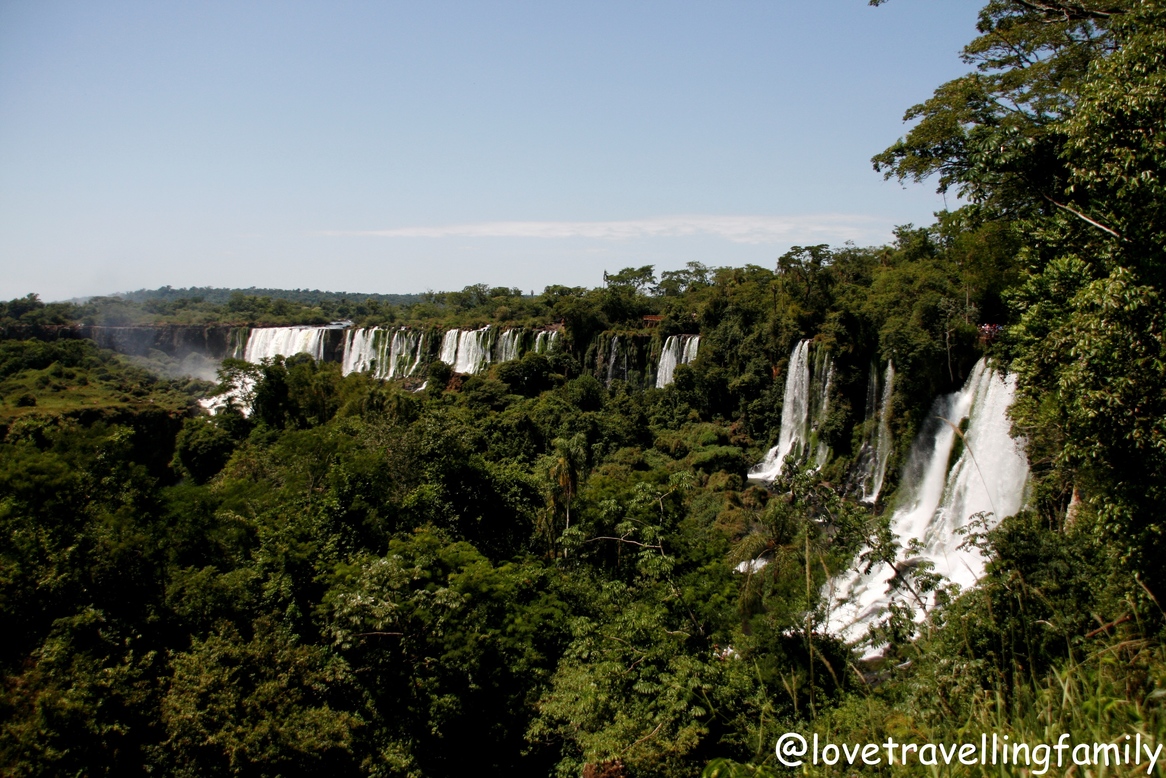
We wanted to see Iguazú because of the landscape itself: water falling across a wide green setting, with more to look at than one viewpoint could hold. Getting there meant a bus journey of more than twenty hours from Buenos Aires to Puerto Iguazú.
The distance made us think differently about the visit. After spending so long reaching the region, we wanted time for the falls rather than a single hurried glimpse. Our original journal is enthusiastic about the Argentine side, which is the side we actually explored.
First published on 17 November 2017. The bus journey and park experience belong to that earlier visit. We explored the Argentine side; this is not a comparison based on visiting both countries’ parks. Official planning information was checked on 18 October 2026.
From Buenos Aires by long-distance bus
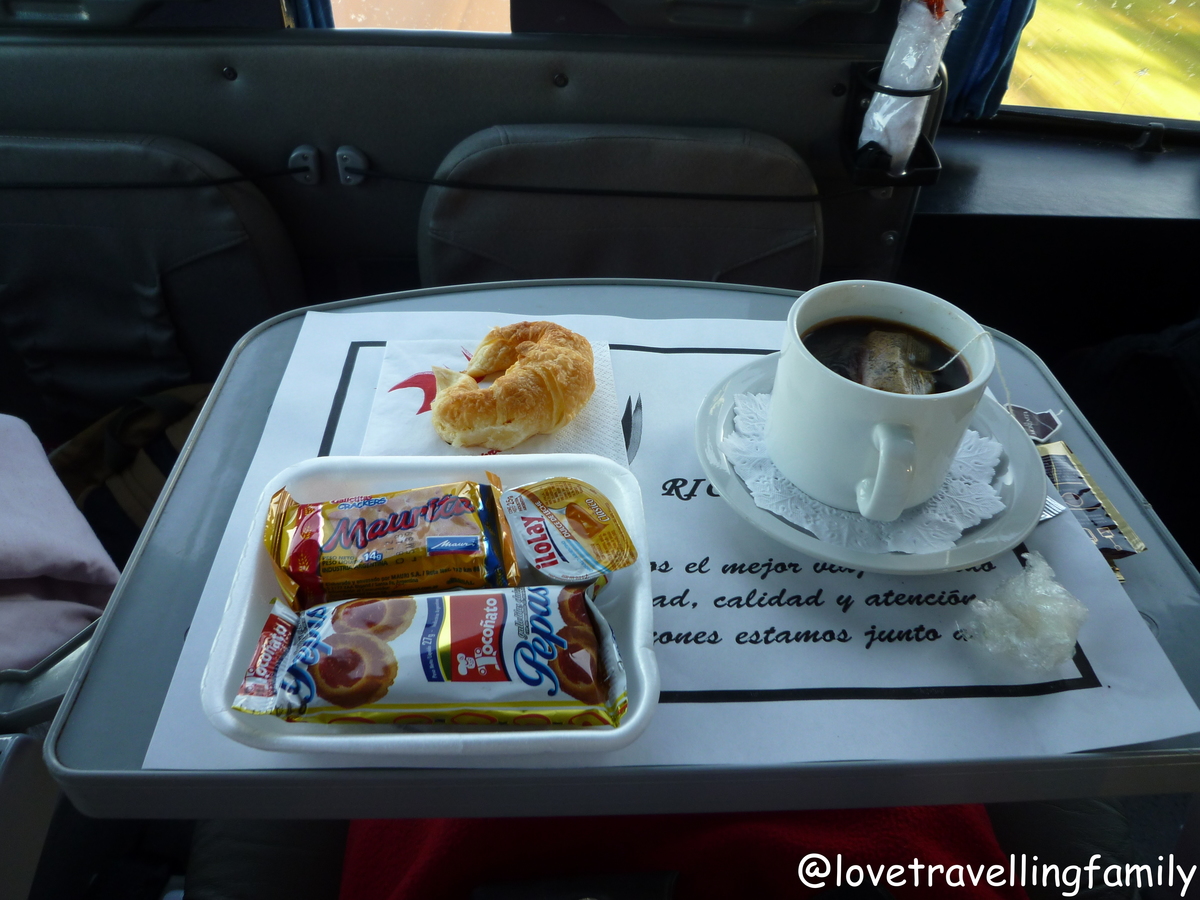
We travelled with Rio Uruguay after talking through the options with an Argentine colleague. Her help made the journey easier to arrange. Our old account described a comfortable drive, and the breakfast photograph gives a more ordinary view of the trip than the waterfall pictures that followed.
The company, route, departure station, seat category and inclusions need to be checked for a new booking. We have not retained the old comparison between bus and flight as a claim that one option is always the most convenient. More than twenty hours suited this particular journey; another family may choose differently.
At a large departure terminal, allow time to identify the right service and keep the documents and essentials you need during the journey close at hand. A confirmed ticket is only one part of making a long transfer manageable.
Use Puerto Iguazú as a place to settle
Puerto Iguazú was our base for the falls. We also walked to Hito Tres Fronteras, where we looked towards the neighbouring countries across the water. It gave us something different from the park day and helped place the visit within a larger landscape.
The old journal was fairly dismissive of the town. A more useful way to read the stop is as the place where we slept, arranged onward journeys and had some time between outings. A base does not have to compete with a national park to matter to the trip.
When choosing accommodation now, ask about the actual transfer to the park, food arrangements and the last return service. Those details can shape the day more than the view from a room.
The falls are part of a protected landscape
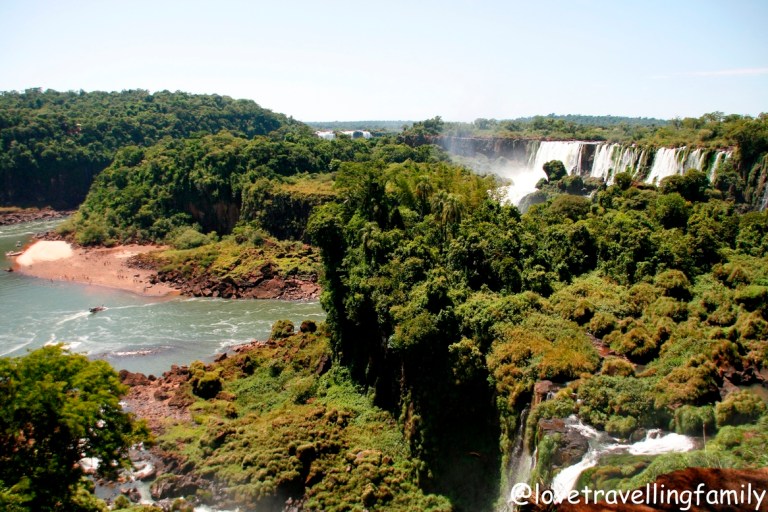
UNESCO’s description of Iguazu National Park places the falls within a subtropical forest landscape and records the Argentine park’s World Heritage status. The vegetation was part of what we loved, rather than merely a frame around the water. 1
Our original account describes exploring independently and enjoying the changing views. That was our choice, not proof that a guide adds nothing for another visitor. Choose according to your interests, mobility, available time and the routes open on the day.
The two waterfall photographs here do not establish which named circuit each view belongs to. Use the park’s current maps and notices to choose routes rather than trying to reconstruct a circuit from a photograph.
Check the entry, circuits and return journey together
Argentina’s national-park information lists the principal circuits, the ecological train and other included facilities. Actual route availability still needs to be checked: weather, river conditions and operational notices can affect a day at the falls. 2
The official tariff page has current visitor categories and links to ticket information. Read the conditions for your own party, and check the terms if you want more than one day. The old post’s general suggestion of discounted repeat entry is not a current entitlement. 2
Use the park’s official access page alongside the ticket details. Confirm the departure point and last return transport from your base, and leave enough time to reach it without hurrying at the end of the visit. 3
Leave space to look again
We recommended more than one day in the original story because we wanted to enjoy the place fully. That describes our preference rather than a rule for every traveller. A shorter visit can still be worthwhile if expectations match the time and routes available.
We did not visit the Brazilian side, so other travellers’ comparisons are not presented here as our own judgement. The clearest recommendation we can make from experience is to allow yourself time to notice how the views change as you move.
For another account shaped by the practical distance between stops, read our journey south of Yerevan. The settings are very different, but both memories include the people and arrangements that made reaching a place part of the story.
Good to know
A couple of useful questions
Did we visit both the Argentine and Brazilian parks?
No. We chose the Argentine side. This journal cannot rank the two sides from first-hand experience.
Are the old bus meals and repeat-entry discounts still included?
They are not established by our earlier experience. Confirm your current bus product and read the national park’s present ticket conditions. 2
Does everyone need two or three days?
That was our preferred pace, not a requirement. Choose what fits the journey, the routes available and the amount of time you can spend without rushing.
Sources and useful links
For more context and practical details:
- UNESCO — Iguazu National Park ↗
- Argentina National Parks — current Iguazú visitor categories and ticket information ↗
- Argentina National Parks — Iguazú access and visiting information ↗
Images and accounts are preserved from our original archive; the note above explains their context. Sources and planning links were checked on 18 October 2026.