Our daughter Zofia was already a keen walker, until she wanted a break. That in-between stage was the reason I began looking for a carrier that would also be convenient when nobody was sitting in it.
On a journey through Austria, Slovenia, Croatia, Bosnia and Herzegovina, and Serbia, we tried a MiniMeis shoulder carrier alongside the larger back carrier we already owned. The useful part of the experiment was ordinary: walking, stopping, carrying and then packing the carrier away again.
A personal gear experience first published on 6 September 2018. The recovered article does not establish the carrier’s model generation. Its comfort observations are historical; current manufacturer information was checked on 18 October 2026. This is not a fitting or safety tutorial.
The problem was carrying the empty carrier
Our larger back carrier had its place on longer outings. On short city walks, however, taking it on and off became cumbersome when Zofia repeatedly wanted to explore on her own feet. We were carrying the equipment even when she did not need to be carried.
The smaller folding carrier appealed because it could go in a bag between those stretches. Our original review described storing it in the car, with our luggage or under the stroller. That made it easier to bring along for a day whose shape we could not predict.
It did not turn every walk into a long-distance outing. Its value to us was flexibility: allowing the child-led rhythm of the day without making the unused carrier the adults’ main concern.
What felt comfortable to us on that trip
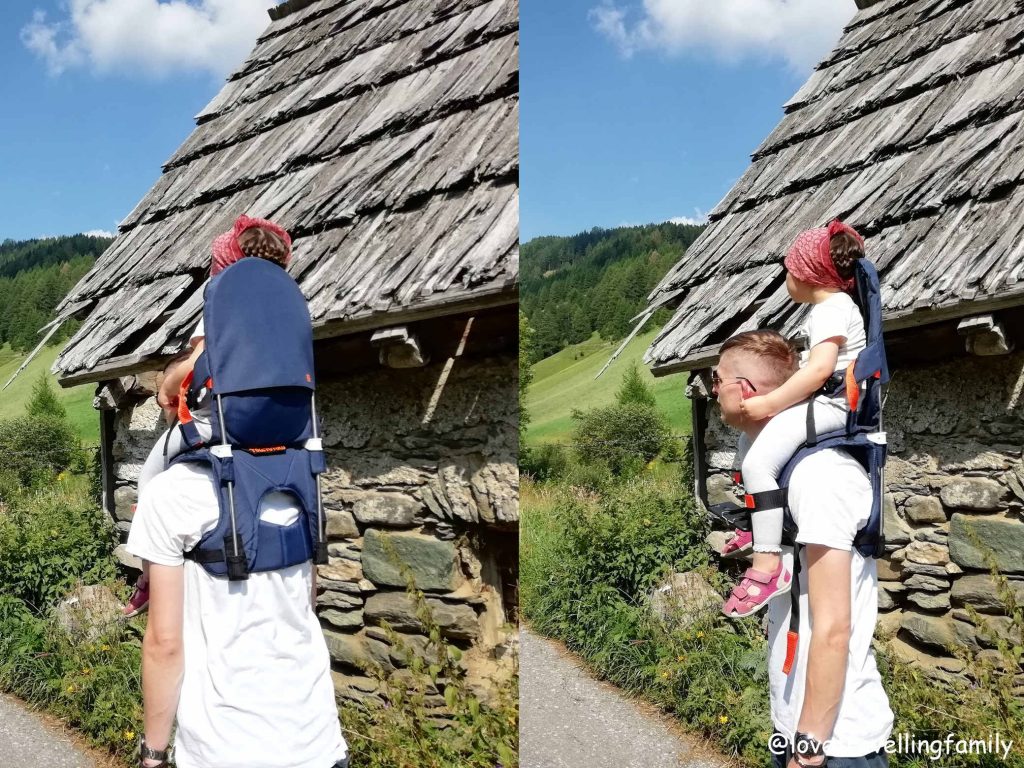
I found carrying Zofia in it more comfortable than carrying her directly on my shoulders, and she said she liked the seat and back support. Those were the main positive observations in the original review. They describe two people using an older product, not a promise about every adult’s back or every child’s fit.
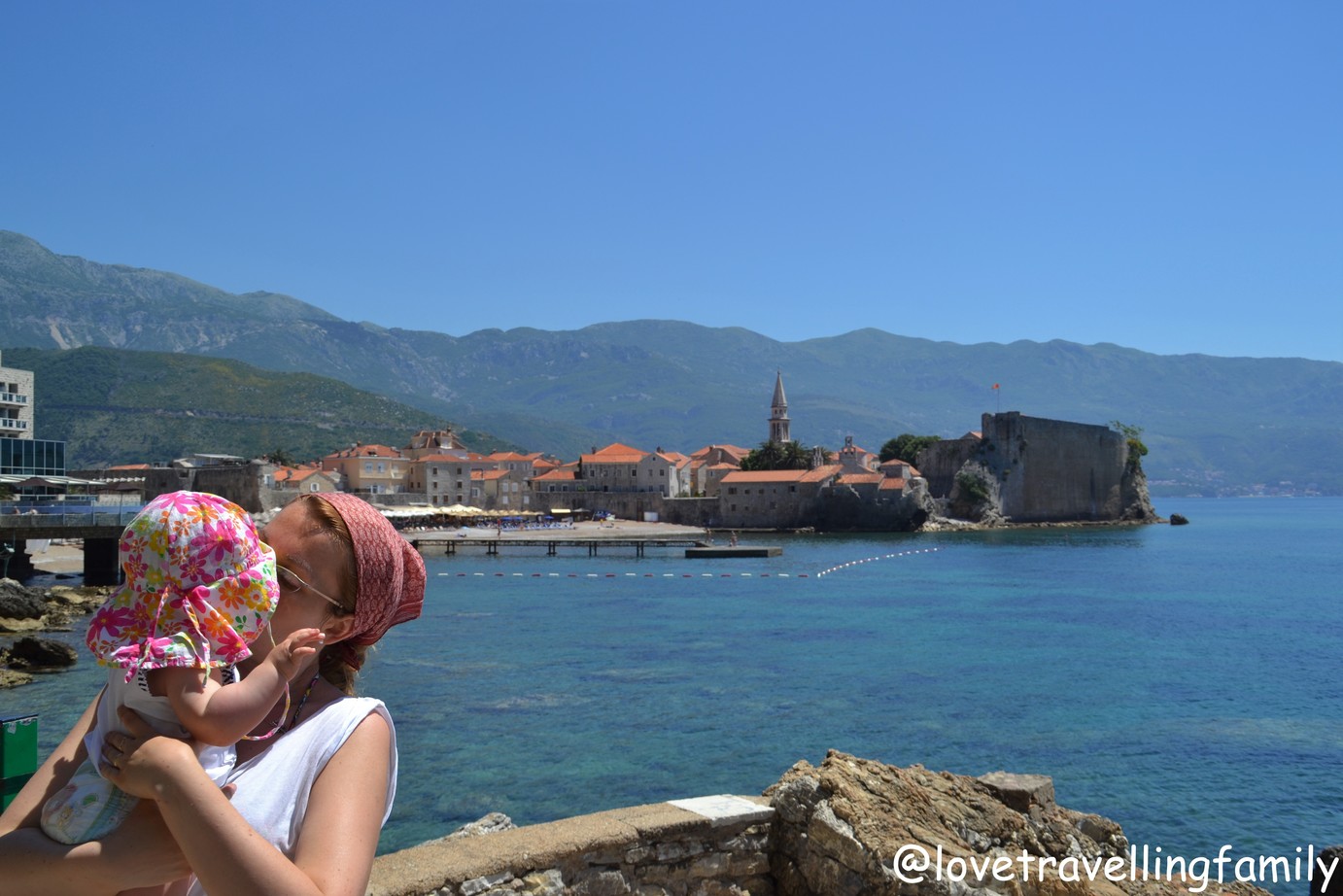
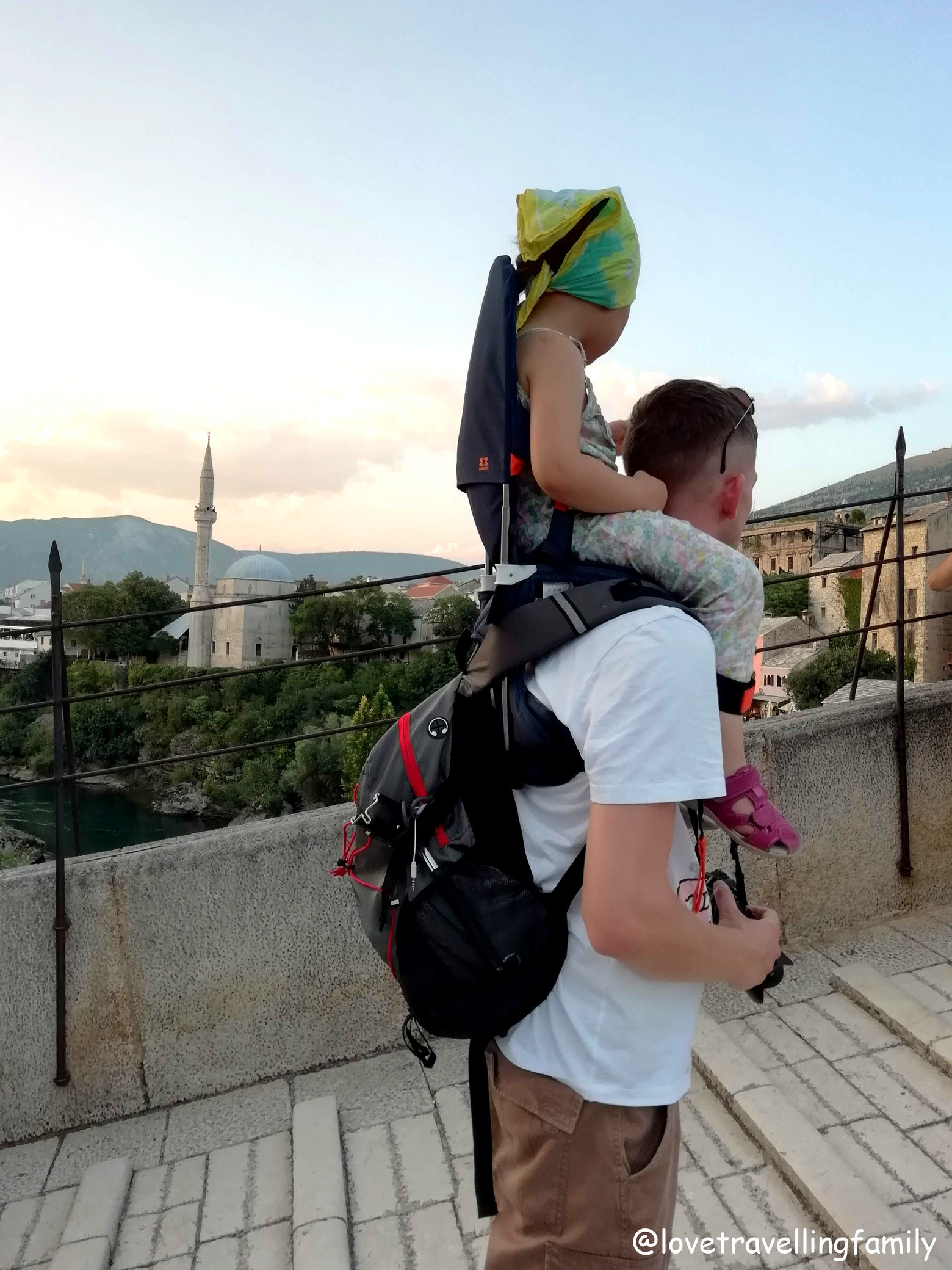
The journal mentioned Austrian mountain walks, Croatian fortresses and Sarajevo’s Old Town. It also described appreciating the view and being able to take photographs. We retain those settings as memories, without turning them into a recommendation for particular terrain or for divided attention while carrying a child.
The photographs are useful evidence of the trip, but they cannot show that every strap was correctly adjusted or that a position was appropriate. A holiday picture should not be treated as a fitting demonstration.
Why the old specifications are not a current buying guide
The 2018 article included measurements, materials, weight and an age range. We have not copied those into a current specification table because the precise model generation is not established. Current products differ from the one described in the archive.
For example, the manufacturer’s present G5 listing gives an age guide of six months to four years and a maximum child weight of 18 kg. Those are G5 details checked on 18 October 2026, not a retrospective identification of our carrier. Read the limits and instructions for the actual model you own or plan to buy. 1
The manufacturer’s instructions require the child to sit unaided, and include checks of the carrier and its restraints before use. Age alone is not a sufficient suitability check. Follow the full instructions supplied for the model, rather than the lifting and loading description in our old review. Ask the manufacturer if the model or instructions are unclear. 2
Keep the memory, choose the outing for your family
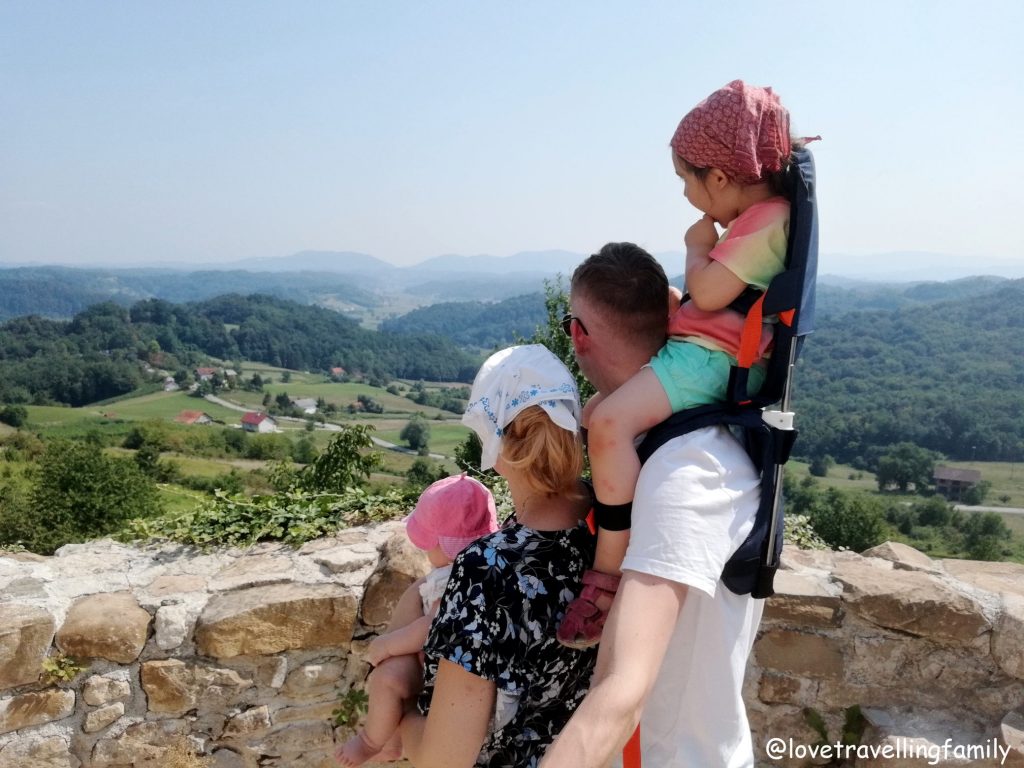
One of the original photographs places us by a stone parapet with a wide landscape behind. It is included as part of the family archive, not as an example of a safe stance or a suitable place to use a carrier. The view explains why we took a photograph; it does not substitute for choosing safe ground and following the product instructions.
Our Budva journal and Mostar family story describe other parts of travelling in this region. The places mattered more than the equipment. A carrier was simply one thing that helped us manage some portions of the day.
What this review can, and cannot, tell you
The original post named Babyton as the retailer from which the carrier came. The recovered text does not clearly establish any commercial arrangement, so we are not adding an invented sponsorship or independence claim. Nor are we treating an old delivery experience as a recommendation about a shop’s present service.
Our conclusion remains personal: we liked the compact carrier for a journey made of short walks and changing plans. Whether a shoulder carrier is right for another family depends on the exact product, child, adult and intended use. Compare the current documentation and, where possible, assess fit before relying on somebody else’s comfort report.
For us, the best part was putting it away and letting Zofia walk when she wanted to. Carrying was a way to make room for her pace, rather than a reason to make the day longer than she enjoyed.
Good to know
A couple of useful questions
Was the carrier in this review a G4 or G5?
The recovered 2018 article does not establish its generation. It should not be labelled as either model on the basis of the photographs or old specifications.
Can the 2018 age range be used for a carrier bought now?
Use the documentation for the exact model. The current G5 page states six months to four years and a maximum of 18 kg; the instructions also require independent sitting. 1 2
Is this a guide to fitting or using a carrier?
No. It is a historical family experience. Follow the manufacturer’s complete instructions for your model; the old photographs and comfort observations do not establish correct fit or safe use. 2
Sources and useful links
For more context and practical details:
Images and accounts are preserved from our original archive; the note above explains their context. Sources and planning links were checked on 18 October 2026.