We came home from Bosnia and Herzegovina wanting to explain how much we had enjoyed it. The journey had given us evening walks, rivers, waterfalls, cities with different layers of history and hosts who made travelling with two young daughters feel possible.
The baby was four months old and our older daughter almost four. That detail changes what a road trip means: feeding, sleep and the next comfortable stop sit alongside the places on a map. Our old article was a country introduction, so this version follows the reasons the journey stayed with us rather than pretending it was a detailed tested itinerary for every stop.
Why a car suited our family then
We travelled by car because it let us stop and change the day around the children. We could look for a place to pause when we needed one, rather than keeping every outing tied to a departure time. It also meant thinking about parking and asking our hosts for practical help.
We parked in places recommended by our hosts. Asking before arrival saved us a search with tired children in the car. For each overnight stop, establish the parking location and the final walk to the accommodation before reaching the centre.
We saw buses on the road, but we did not test a public-transport version of the trip. Anyone travelling without a car should check the actual connections between chosen stops, onward services and the final approach to accommodation. Seeing a modern bus is not enough to establish a complete route.
Leave room for the places beside the water
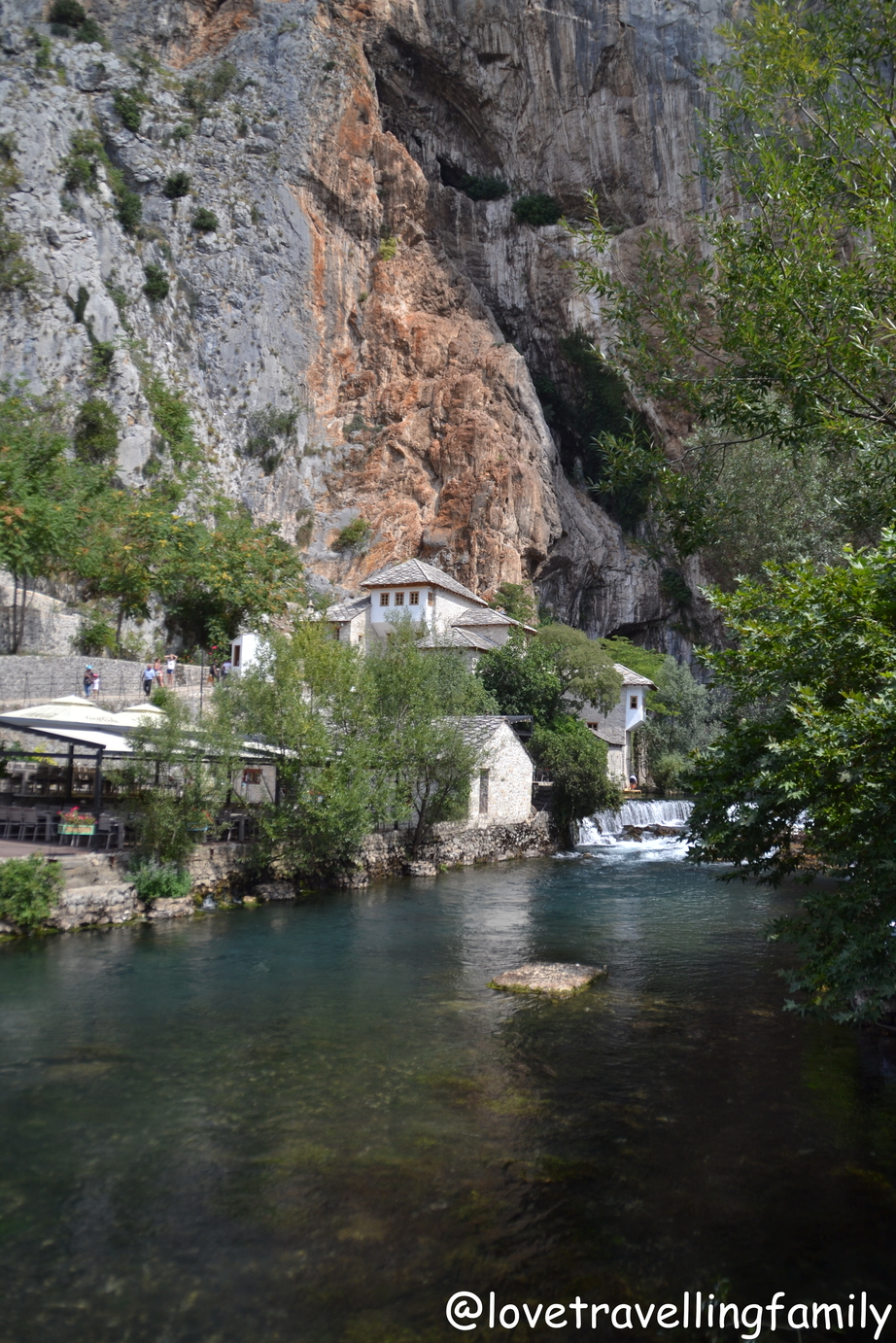
Our journey included Kravica waterfalls, Blagaj, Jajce and its watermills. These are separate outings rather than different names for one location. The water and landscape offered a change of pace from city streets, especially during a long journey with children.
Near Jajce, the local public heritage and tourism agency places the Mlinčići watermills beside the Pliva Lakes. Its page is a useful orientation point for that specific stop. Check the actual paths, facilities and conditions before deciding what suits your family; a scenic picture does not show the whole approach. 2
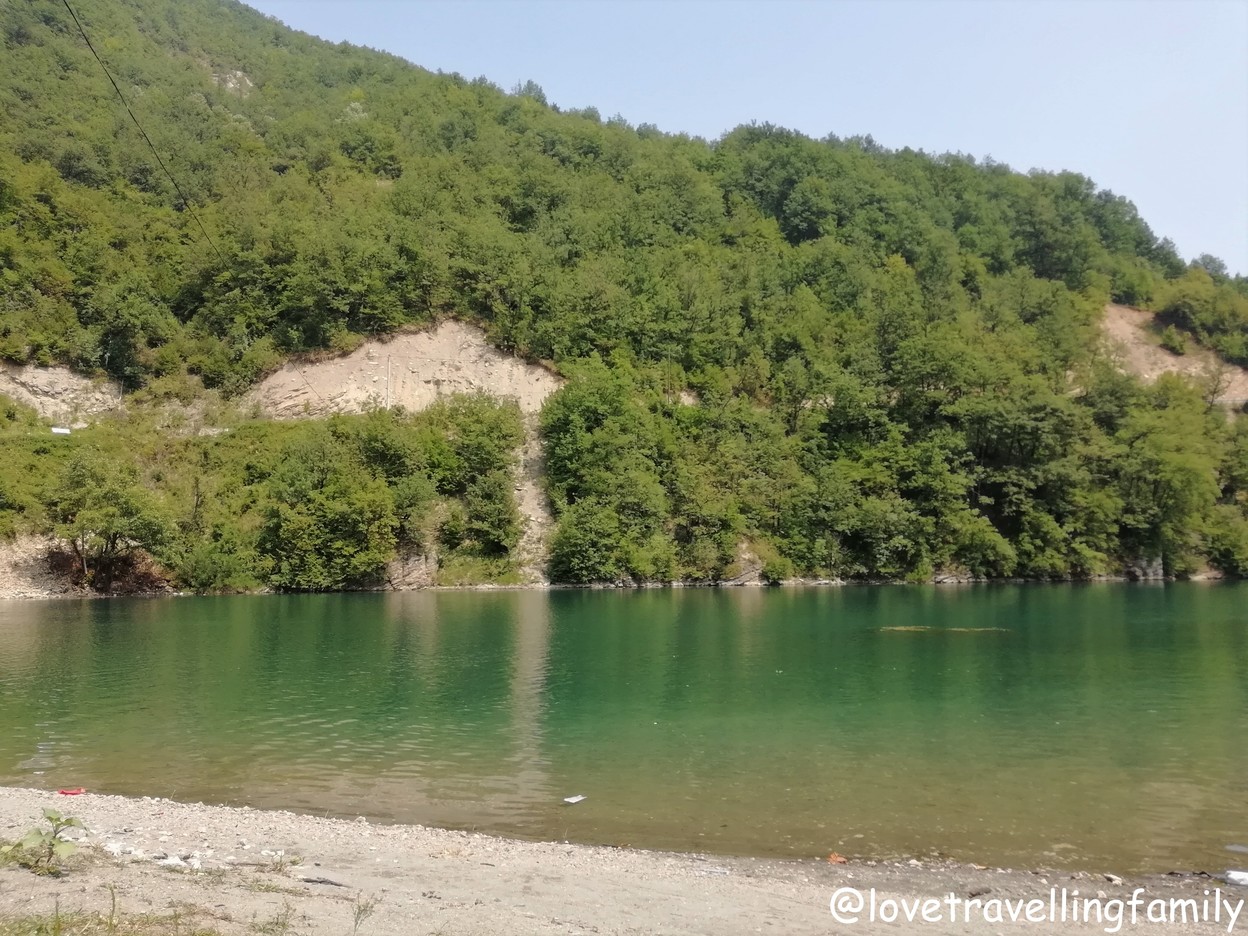
Some of our favourite pauses were simply beside the water. After time in the car, a place to sit and watch the landscape could be enough; the day did not always need another named attraction.
The welcome that made the days easier
We found welcoming hosts, rooms that worked for us and food we enjoyed. Those everyday comforts mattered with a very young baby. Being able to settle in, eat and rest made the next day’s journey easier.
When asking about a room, include what the family actually needs: sleeping arrangements, parking, a kitchen or fridge if required, and the route from the entrance with bags. Compare the complete stay rather than a room price on its own.
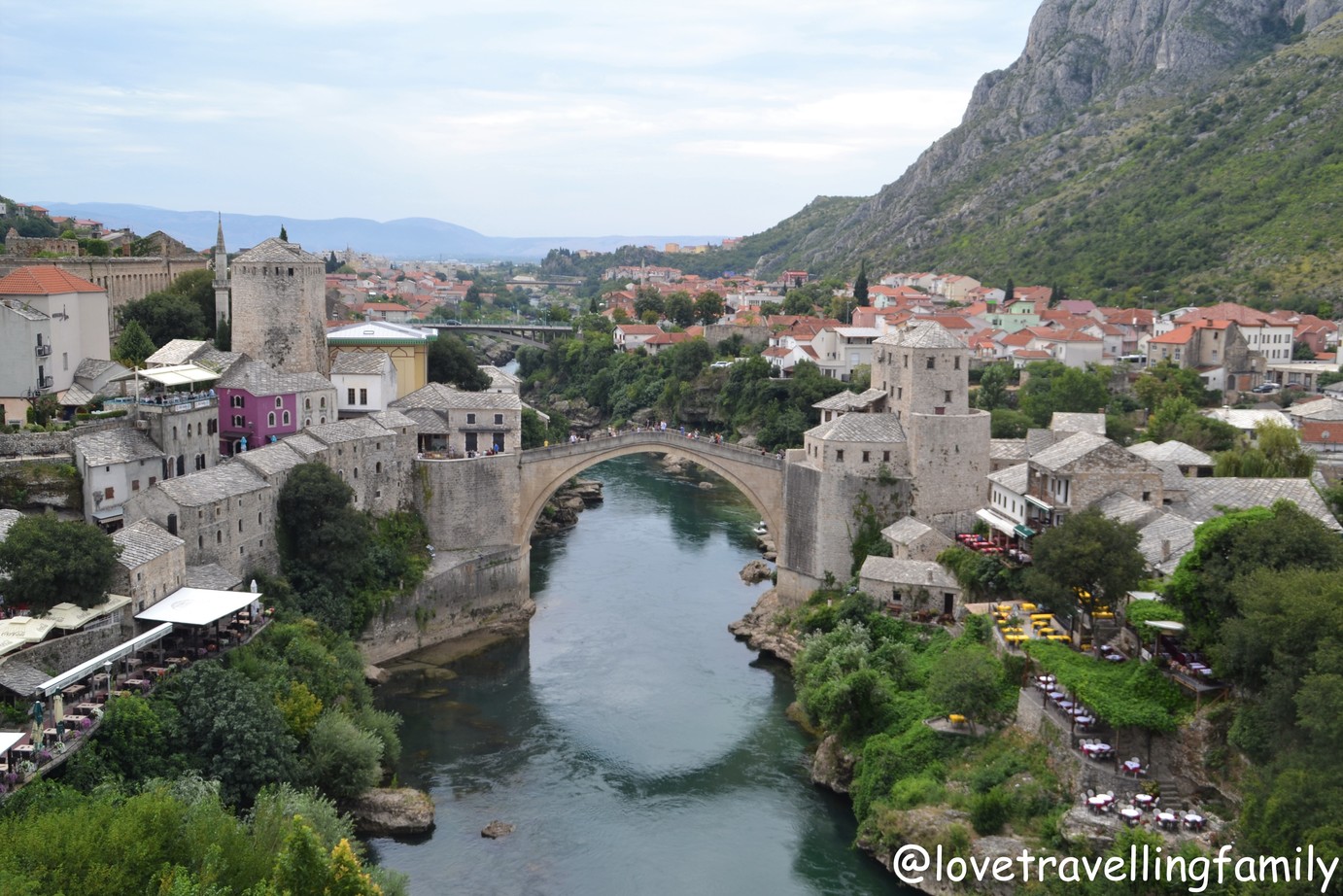
The collage below brings together the streets, mountains and water that gave the road trip its variety. The contrasts mattered as much as individual sights: a quiet pause could follow a difficult history lesson or a busy town.
Keep a current outdoor plan alongside the memories
Our feeling of welcome should not become an unlimited safety promise. One specific present-day planning issue is the remaining landmines and unexploded weapons from the war. FCDO advice says not to leave roads and paved areas without an experienced guide, particularly around rural or neglected land. Follow marked visitor routes, local guidance and warning signs rather than improvising a shortcut or an abandoned-building visit. 3
A family road trip can still be shaped around particular towns and managed visitor sites, with each outing checked on its own terms. Decide the next day’s route with room for rest and daylight, rather than treating every landscape visible from the car as somewhere to explore freely.
Our shoulder-carrier journal describes one piece of equipment we tried during a Balkan journey. Like this account, it is a personal experience to read alongside current information, not a shortcut around choosing what is suitable for your own family.
Plan the visit
Know before you go
Baščaršija and Sebilj
- Plan your time
- Use Sebilj as a clear meeting point and choose a small Old Town loop with a food break. Keep Sarajevo as its own stop rather than squeezing it into the same outing as Jajce.
- Booking & access
- Choose museum entry or a guided tour separately from a self-guided Old Town walk.
Sarajevo Tourism places Sebilj in Baščaršija’s Old Town market area, where small cobbled alleys connect the historic quarter.
Mlinčići watermills by the Pliva Lakes
- Plan your time
- Treat the watermills as a separate daylight outing from Jajce and allow time to pause by the lakes. Carry what you need for the child rather than planning a rushing detour.
- Booking & access
- Arrange the journey to the lakes separately from any guided visit in central Jajce.
Jajce’s public heritage and tourism agency places the watermills outing beside the Great and Small Pliva Lakes, about five kilometres from Jajce.
Visitor information checked 19 October 2026. Timing suggestions are our planning advice.
Good to know
A couple of useful questions
How old were the children on this trip?
The original account describes a four-month-old baby and an almost-four-year-old older daughter. It was not a trip with two toddlers.
Did we test a bus itinerary through the country?
No. We travelled by car and observed buses, but the original does not establish connections, timetables or accessibility for a public-transport version.
Can we wander away from paths to explore the countryside?
Use established visitor routes and local guidance. FCDO warns about mines and unexploded weapons and advises staying on roads and paved areas unless accompanied by an experienced guide. 3
Sources and useful links
References for the practical information in this article:
- Visit Sarajevo — the official city heritage and attraction overview ↗
- Jajce public heritage and tourism agency — Mlinčići watermills ↗
- UK FCDO — Bosnia and Herzegovina safety and outdoor travel advice ↗
Information checked on 19 October 2026.