I was introduced to Armenia in Poland. For many years my family has been close to an Armenian family in our town. As a teenager I sat at their celebrations, heard long toasts, old songs sung with longing for the homeland, and stories of the 1988 earthquake and the Genocide. Armenia became part of me, and later of my husband too.
The father of that family died a few weeks after we invited him to our wedding. We kept his name on the invitations, danced our first dance to an Armenian song with Mount Ararat projected behind us, and knew there was only one place for our honeymoon.
We travelled to Armenia on our honeymoon in September 2013, before we had children.
Waking up to Mount Ararat
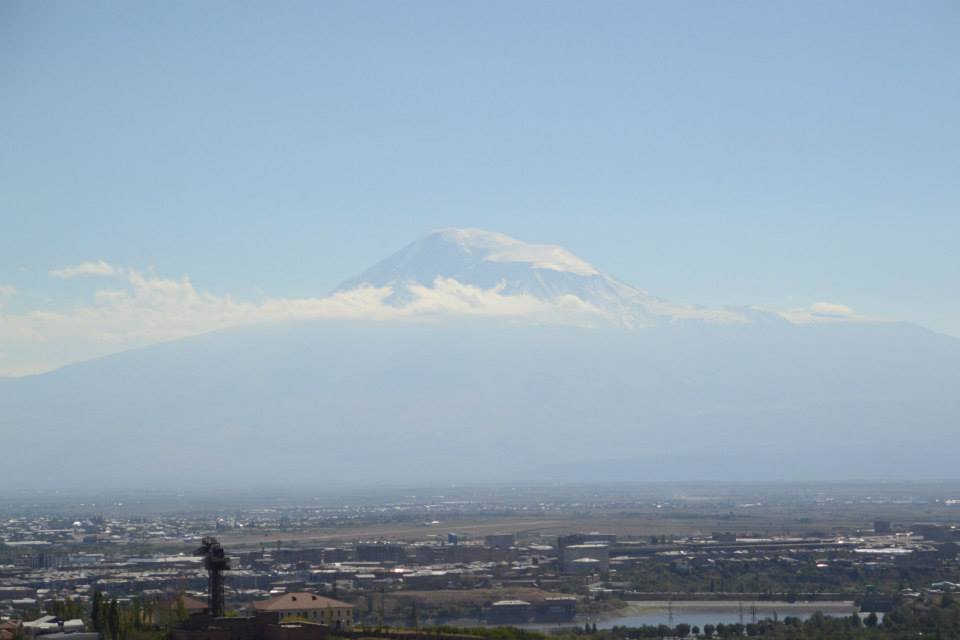
We chose our hostel in Yerevan because the photographs showed Ararat from the balcony. On our first morning the sky was clear, and I could not concentrate on anything else. For Armenians, Ararat is the holy mountain of legends, poems and the national coat of arms, the resting place of Noah’s Ark, even though today it stands across the border in Turkey.
A woman cleaning the hostel came over and said quietly: “Our pride, but not ours.” We were lucky: in summer the mountain is often hidden by haze, and on many days by cloud. Clear mornings in autumn give the best chance of seeing it.
Tsitsernakaberd, the Armenian Genocide Memorial
If you come to Armenia consciously, begin at Tsitsernakaberd, the Armenian Genocide Memorial and Museum on a hill above Yerevan. 1 The Genocide began on 24 April 1915 with the arrest of Armenian intellectuals in Constantinople; up to 1.5 million Armenians were killed in the following years. Many countries now formally recognise it as genocide.
We visited the museum and the memorial with its eternal flame, with Ararat in the background. It is a place of deep sorrow, and also the key to understanding present-day Armenia. Without that history, a visitor sees only Soviet architecture and old churches.
Khor Virap and the road south
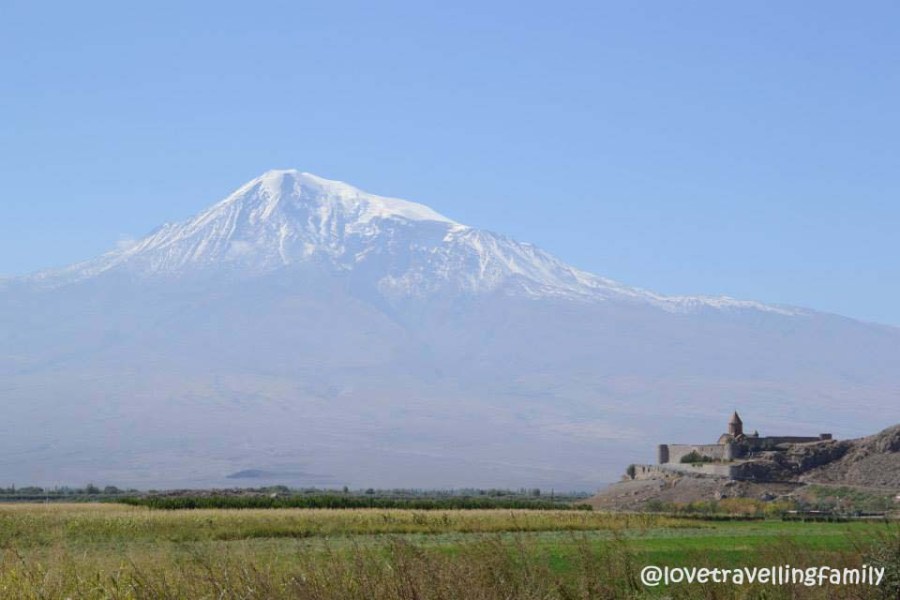
The classic view of Ararat with a monastery in front of it is at Khor Virap, south of Yerevan. We describe that journey in Khor Virap, Areni and Noravank.
Planning a visit
- Choose accommodation with a view towards Ararat if seeing the mountain matters to you.
- Visit the Genocide museum early in your trip; it gives meaning to everything else.
- Check current travel advice for Armenia, especially for areas near its borders. 2
Good to know
A couple of useful questions
Can you see Mount Ararat from Yerevan?
Yes, on clear days. Mornings in autumn usually give the best views; summer haze and cloud often hide the mountain.
Where is the Armenian Genocide Memorial?
At Tsitsernakaberd, on a hill in Yerevan, together with the Armenian Genocide Museum-Institute.
Sources and useful links
References for the practical information in this article:
Information checked on 22 October 2026.